
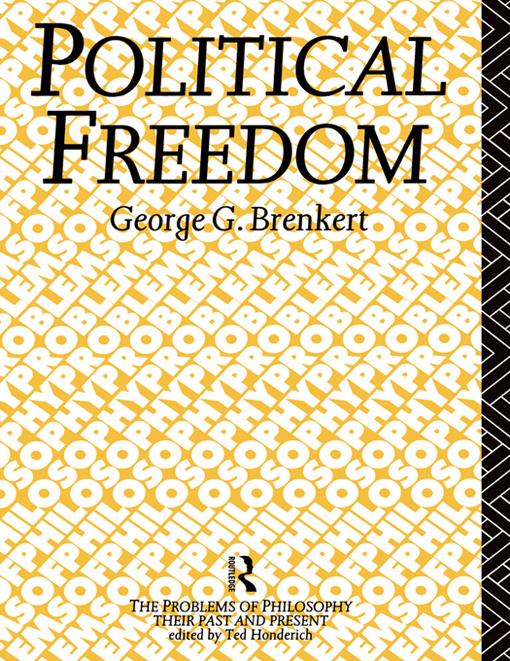
This book examines the underlying theoretical issues concerning the nature of political freedom. Arguing that most previous discussions of such freedom have been too narrowly focused, it explores both conservativism from Edmund Burke to its present resurgence, the radical tradition of Karl Marx, as well as the orthodox liberal model of freedom of John Locke, John Stuart Mill and Isaiah Berlin. Political Freedom argues that these three accounts of political freedom - conservative, liberal and radical - all have internal weaknesses which render them unsatisfactory.
In the second part of the book George Brenkert develops an alternative theory of political freedom. Using the guiding concept of empowerment, his model explores individual rights, democratic participation in government and workplace, and the need to provide the material and educational resources to allow individuals to effectively exercise their rights to self-determination. It is a clear and bold attack on the view that there is no link between freedom and power.
Betal nemt med kort, Klarna, Apple Pay eller Google Pay. Ikke tilfreds? Du har altid 14 dages fortrydelsesret. Læs mere i vores vilkår. Har du spørgsmål, så send os en mail på hello@memmo.org.
Memmo gør det nemmere at studere – uanset hvor du er i verden. Hos os samler du dine kursusbøger og smarte studieværktøjer ét sted: resuméer, quizzer, podcasts og flashcards. Og så er der Ted, din studieven, der svarer på alt, du undrer dig over. Over 50 000 studerende studerer allerede her – bygget til at hjælpe dig med at lære hurtigere og stresse mindre.