
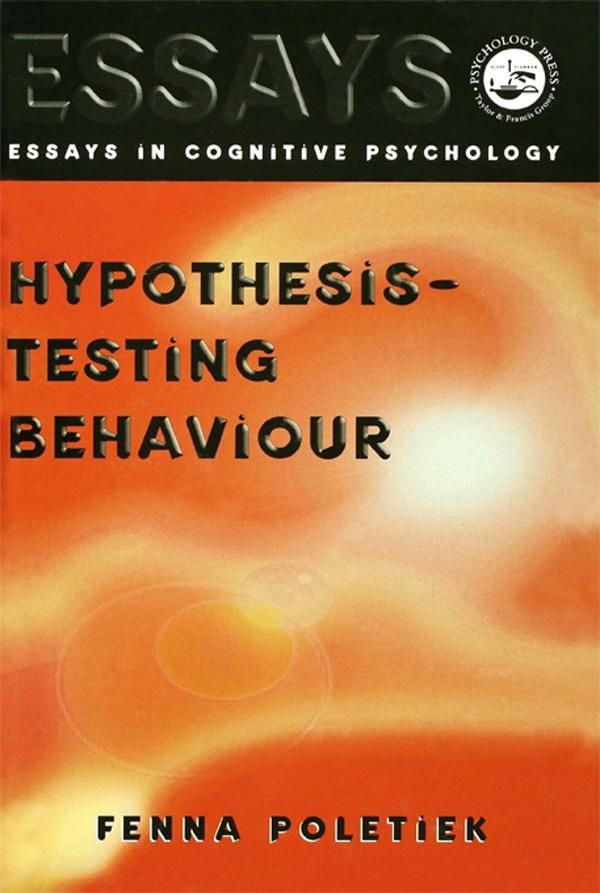
How do people search evidence for a hypothesis? A well documented answer in cognitive psychology is that they search for confirming evidence. However, the rational strategy is to try to falsify the hypothesis. This book critically evaluates this contradiction. Experimental research is discussed against the background of philosophical and formal theories of hypothesis testing with striking results: Falsificationism and verificationism - the two main rival philosophies of testing - come down to one and the same principle for concrete testing behaviour, eluding the contrast between rational falsification and confirmation bias.
In this book, the author proposes a new perspective for describing hypothesis testing behaviour - the probability-value model - which unifies the contrasting views. According to this model, hypothesis testers pragmatically consider what evidence and how much evidence will convince them to reject or accept the hypothesis. They might either require highly probative evidence for its acceptance, at the risk of its rejection, or protect it against rejection and go for minor confirming observations. Interestingly, the model refines the classical opposition between rationality and pragmaticity because pragmatic considerations are a legitimate aspect of 'rational' hypothesis testing. Possible future research and applications of the ideas advanced are discussed, such as the modelling of expert hypothesis testing.
Betal nemt med kort, Klarna, Apple Pay eller Google Pay. Ikke tilfreds? Du har altid 14 dages fortrydelsesret. Læs mere i vores vilkår. Har du spørgsmål, så send os en mail på hello@memmo.org.
Memmo gør det nemmere at studere – uanset hvor du er i verden. Hos os samler du dine kursusbøger og smarte studieværktøjer ét sted: resuméer, quizzer, podcasts og flashcards. Og så er der Ted, din studieven, der svarer på alt, du undrer dig over. Over 50 000 studerende studerer allerede her – bygget til at hjælpe dig med at lære hurtigere og stresse mindre.
Du kan måske også lide
Køb bogen0