
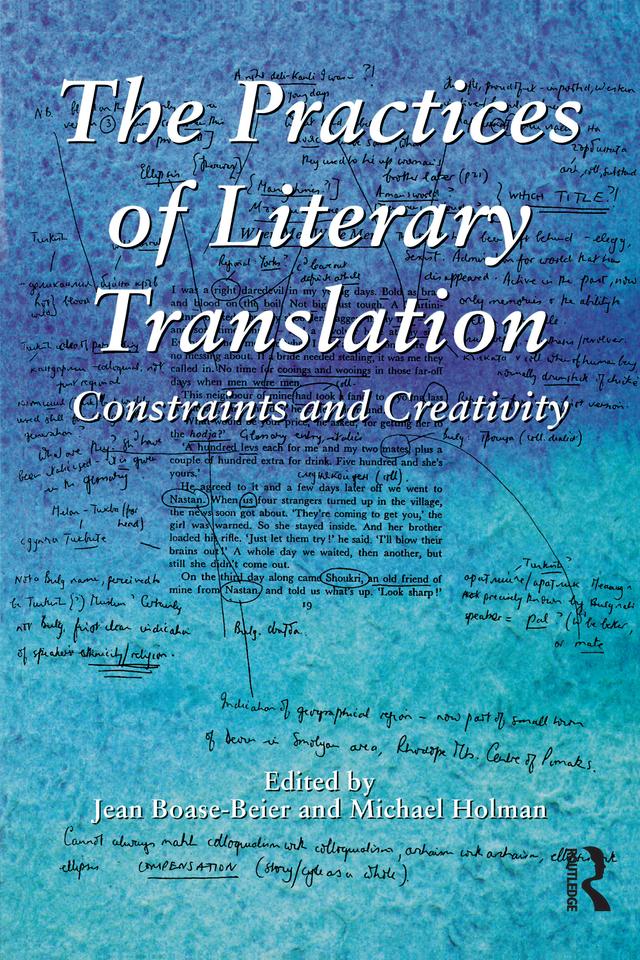
In their introduction to this collection of essays, the editors argue that constraints can be seen as a source of literary creativity, and given that translation is even more constrained than 'original' literary production, it thus has the potential to be even more creative too. The ten essays that follow outline ways in which translators and translations are constrained by poetic form, personal histories, state control, public morality, and the non-availability of comparable target language subcodes, and how translator creativity may-or may not-overcome these constraints. Topics covered are: Baudelaire's translation practices; bowdlerism in translations of Voltaire, Boccaccio and Shakespeare, among others; Leyris's translations of Gerard Manley Hopkins; ideology in English-Arabic translation; the translation of censored Greek poet Rhea Galanaki; theatre translation; Nabokov and translation; gay translation; Moratín's translation of Hamlet; and state control of translation production in Nazi Germany. The essays are mostly highly readable, and often entertaining.
Betal nemt med kort, Klarna, Apple Pay eller Google Pay. Ikke tilfreds? Du har altid 14 dages fortrydelsesret. Læs mere i vores vilkår. Har du spørgsmål, så send os en mail på hello@memmo.org.
Memmo gør det nemmere at studere – uanset hvor du er i verden. Hos os samler du dine kursusbøger og smarte studieværktøjer ét sted: resuméer, quizzer, podcasts og flashcards. Og så er der Ted, din studieven, der svarer på alt, du undrer dig over. Over 50 000 studerende studerer allerede her – bygget til at hjælpe dig med at lære hurtigere og stresse mindre.
Du kan måske også lide
Køb bogen0