
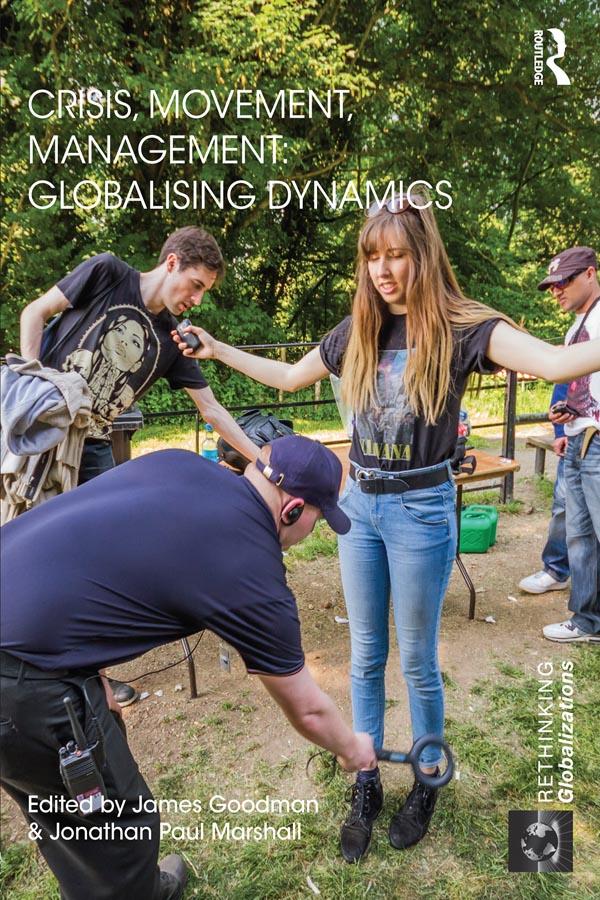
Globalised neo-liberalism has produced multiple crises – social, ecological, political. In the past, crises of global order have generated large-scale social transformations, and the current crises likewise hold a transformative promise. Social movements become a crucial barometer, in signalling both the demise and rise of political formations and programs. Elite strategies, framed as crisis management, create their own disordering side-effects. Experiments in movement strategy gain greater significance, as do contending elite efforts at repressing, managing or displacing the fall-out. In this book we investigate both movements and management in the face of crisis, taking crisis and unanticipated consequences as a normal state-of-play. The book enquires into the winners and losers from crisis, and investigates the movement-management nexus as it unfolds in particular localities as well as in broader contexts.
The book deals with some of the most pressing conflicts of our time, and produces a range of theoretical insights: the ubiquity of crisis is seen as not only a hallmark of social life, but a way into a different kind of social analysis.
This book was published as a special issue of Globalizations.
Betal nemt med kort, Klarna, Apple Pay eller Google Pay. Ikke tilfreds? Du har altid 14 dages fortrydelsesret. Læs mere i vores vilkår. Har du spørgsmål, så send os en mail på hello@memmo.org.
Memmo gør det nemmere at studere – uanset hvor du er i verden. Hos os samler du dine kursusbøger og smarte studieværktøjer ét sted: resuméer, quizzer, podcasts og flashcards. Og så er der Ted, din studieven, der svarer på alt, du undrer dig over. Over 50 000 studerende studerer allerede her – bygget til at hjælpe dig med at lære hurtigere og stresse mindre.