
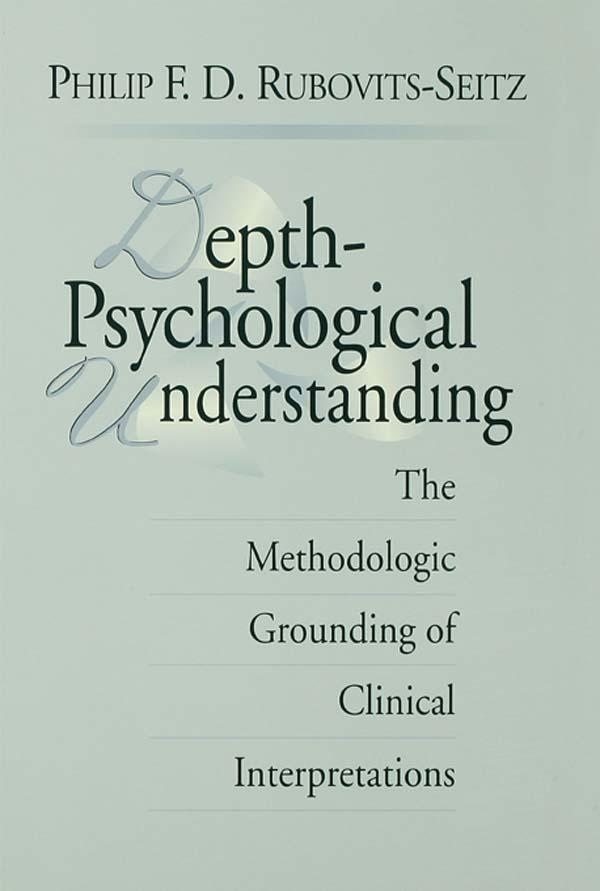
Although clinical interpretation originated with Freud, the latter's positivist preference for purely observational methods made him ambivalent toward interpretive methods. According to Rubovits-Seitz, the legacy of Freud's positivism still pervades clinical thinking and interferes with progress in investigating and improving interpretive methods. He reviews the paradigm shift in general science from positivism to postpositivism by way of demonstrating the compatibility of interpretive inquiry with a postpositivist approach.
Post-Freudian models of clinical interpretation are evaluated, andclinical methods of interpretation are compared with interpretive approachesin nonclinical fields. A detailed discussion of the neglected problem ofjustifying interpretations incorporates evaluations of specific justifyingprocedures and a case report illustrating applications of such methods. Thework concludes with a consideration of common but avoidable errors in clinicalinterpretation along with remedial strategies for dealing with them.
Following Depth-Psychological Understanding, clinicians may no longer take for granted the interpretive process and the accuracy of their own interpretations. Rubovits-Seitz's scholarly survey marks a major advance in comprehending the methodology of clinical interpretation and in setting forth both the problems and promise of interpretive methods.
Betal nemt med kort, Klarna, Apple Pay eller Google Pay. Ikke tilfreds? Du har altid 14 dages fortrydelsesret. Læs mere i vores vilkår. Har du spørgsmål, så send os en mail på hello@memmo.org.
Memmo gør det nemmere at studere – uanset hvor du er i verden. Hos os samler du dine kursusbøger og smarte studieværktøjer ét sted: resuméer, quizzer, podcasts og flashcards. Og så er der Ted, din studieven, der svarer på alt, du undrer dig over. Over 50 000 studerende studerer allerede her – bygget til at hjælpe dig med at lære hurtigere og stresse mindre.