
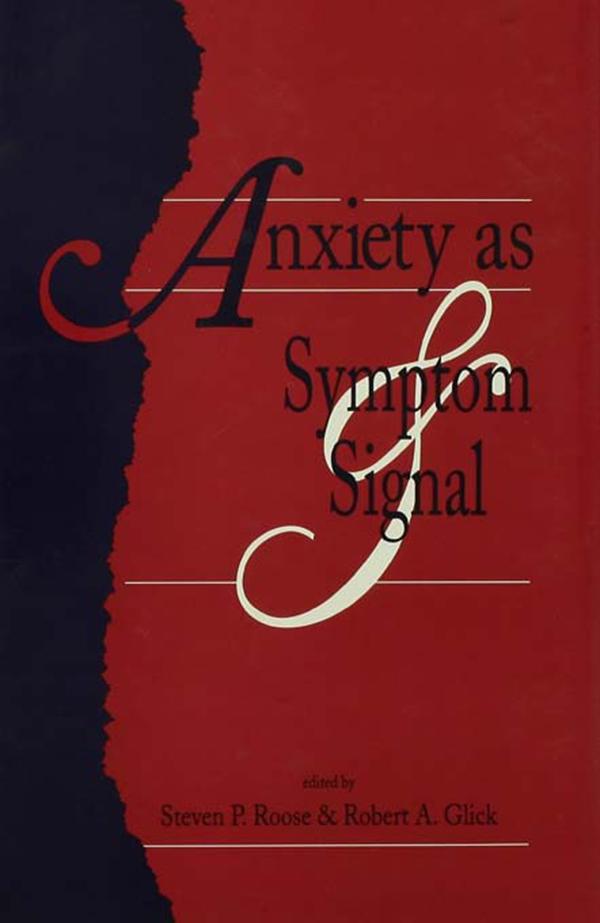
The concept of anxiety has long held a central place in psychoanalytic theories of mind and treatment. Yet, in recent years, data from the neurosciences and from pharmacological studies have posed a compelling challenge to psychoanalytic models of anxiety. One major outcome of these studies is the realization that anxiety both organizes and disorganizes, that it can be both symptom and signal. In Anxiety as Symptom and Signal, editors Steven Roose and Robert Glick have brought together distinguished contributors to address these different dimensions of anxiety. A section of original papers on "Anxiety as Symptom" covers evolutionary, neuroanatomical, genetic, and developmental perspectives. A complementary section on "Anxiety as Signal" focuses on the meanings and functions of anxiety in the clinical process; contributions address anxiety in its ego-psychological, intersubjective, and relational dimensions.
The illuminating, readable collection will broaden clinicians' awareness of the diverse research findings that now inform our understanding of anxiety. No less importantly, it will deepen their appreciation of the richly variegated ways that anxiety can shape, and be shaped by, the clinical process.
Betal nemt med kort, Klarna, Apple Pay eller Google Pay. Ikke tilfreds? Du har altid 14 dages fortrydelsesret. Læs mere i vores vilkår. Har du spørgsmål, så send os en mail på hello@memmo.org.
Memmo gør det nemmere at studere – uanset hvor du er i verden. Hos os samler du dine kursusbøger og smarte studieværktøjer ét sted: resuméer, quizzer, podcasts og flashcards. Og så er der Ted, din studieven, der svarer på alt, du undrer dig over. Over 50 000 studerende studerer allerede her – bygget til at hjælpe dig med at lære hurtigere og stresse mindre.