
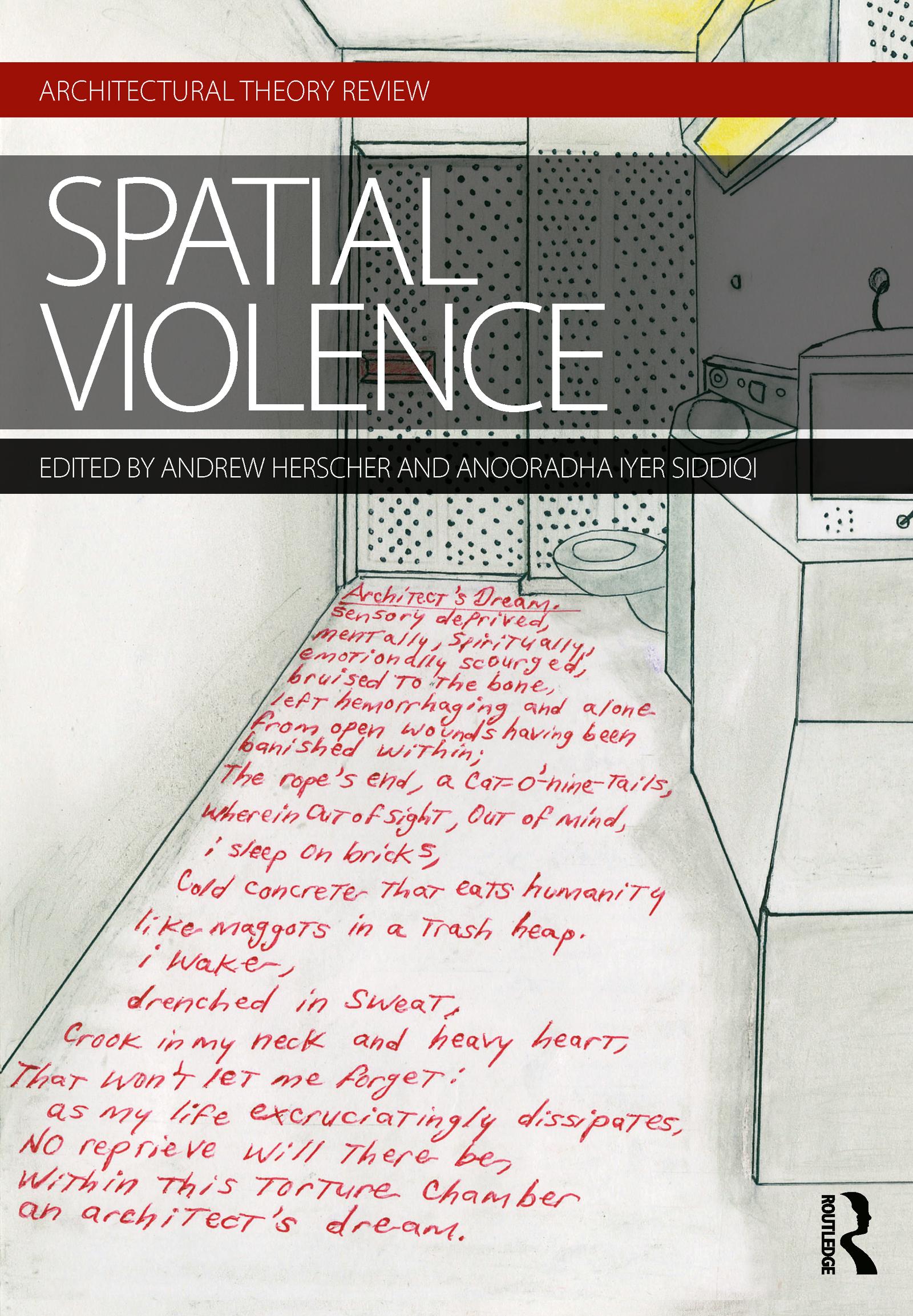
This book poses spatial violence as a constitutive dimension of architecture and its epistemologies, as well as a method for theoretical and historical inquiry intrinsic to architecture; and thereby offers an alternative to predominant readings of spatial violence as a topic, event, fact, or other empirical form that may be illustrated by architecture. Exploring histories of and through architecture at sites across the globe, the chapters in the book blur the purportedly distinctive borders between war and peace, framing violence as a form of social, political, and economic order rather than its exceptional interruption. Regarding space and violence as co-constitutive, the book’s collected essays critique modernization and capitalist accumulation as naturalized modes for the extraction of violence from everyday life. Focusing on the mediation of violence through architectural registers of construction, destruction, design, use, representation, theory, and history, the book suggests that violence is not only something inflicted upon architecture, but also something that architecture inflicts. In keeping with Walter Benjamin’s formulation that there is no document of civilization that is not also a document of barbarism, the book offers "spatial violence" as another name for "architecture" itself. This book was previously published as a special issue of Architectural Theory Review.
Betal nemt med kort, Klarna, Apple Pay eller Google Pay. Ikke tilfreds? Du har altid 14 dages fortrydelsesret. Læs mere i vores vilkår. Har du spørgsmål, så send os en mail på hello@memmo.org.
Memmo gør det nemmere at studere – uanset hvor du er i verden. Hos os samler du dine kursusbøger og smarte studieværktøjer ét sted: resuméer, quizzer, podcasts og flashcards. Og så er der Ted, din studieven, der svarer på alt, du undrer dig over. Over 50 000 studerende studerer allerede her – bygget til at hjælpe dig med at lære hurtigere og stresse mindre.