
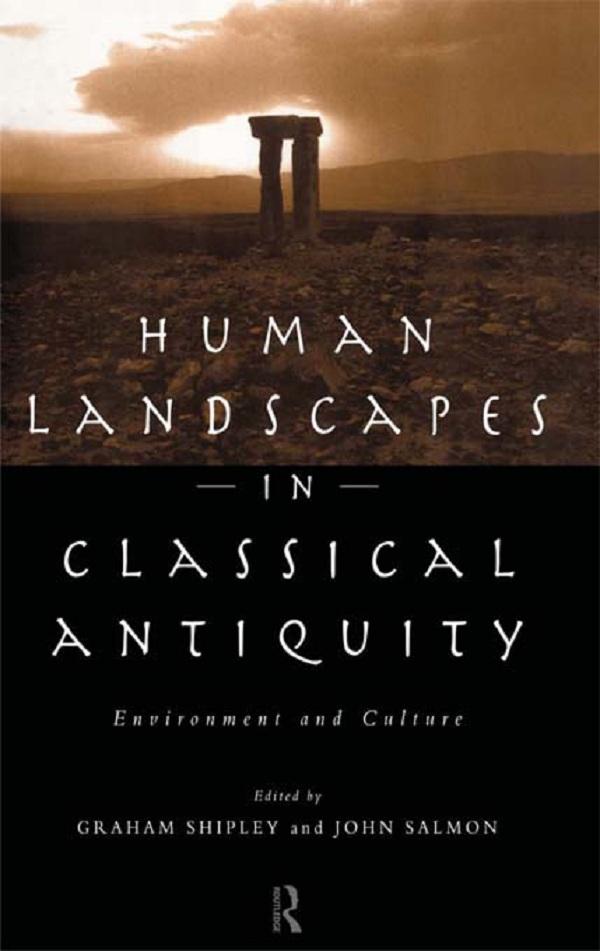
Human Landscapes in Classical Antiquity shows how today's environmental and ecological concerns can help illuminate our study of the ancient world. The contributors consider how the Greeks and Romans perceived their natural world, and how their perceptions affected society. The effects of human settlement and cultivation on the landscape are considered, as well as the representation of landscape in Attic drama. Various aspects of farming, such as the use of terraces and the significance of olive growing are examined. The uncultivated landscape was also important: hunting was a key social ritual for Greek and hellenistic elites, and 'wild' places were not wastelands but played an essential economic role. The Romans' attempts to control their environment are analyzed.
This volume shows how Greeks and Romans worked hand in hand with their natural environment and not against it. It represents an outstanding collaboration between the disciplines of history and archaeology.
Betal nemt med kort, Klarna, Apple Pay eller Google Pay. Ikke tilfreds? Du har altid 14 dages fortrydelsesret. Læs mere i vores vilkår. Har du spørgsmål, så send os en mail på hello@memmo.org.
Memmo gør det nemmere at studere – uanset hvor du er i verden. Hos os samler du dine kursusbøger og smarte studieværktøjer ét sted: resuméer, quizzer, podcasts og flashcards. Og så er der Ted, din studieven, der svarer på alt, du undrer dig over. Over 50 000 studerende studerer allerede her – bygget til at hjælpe dig med at lære hurtigere og stresse mindre.