
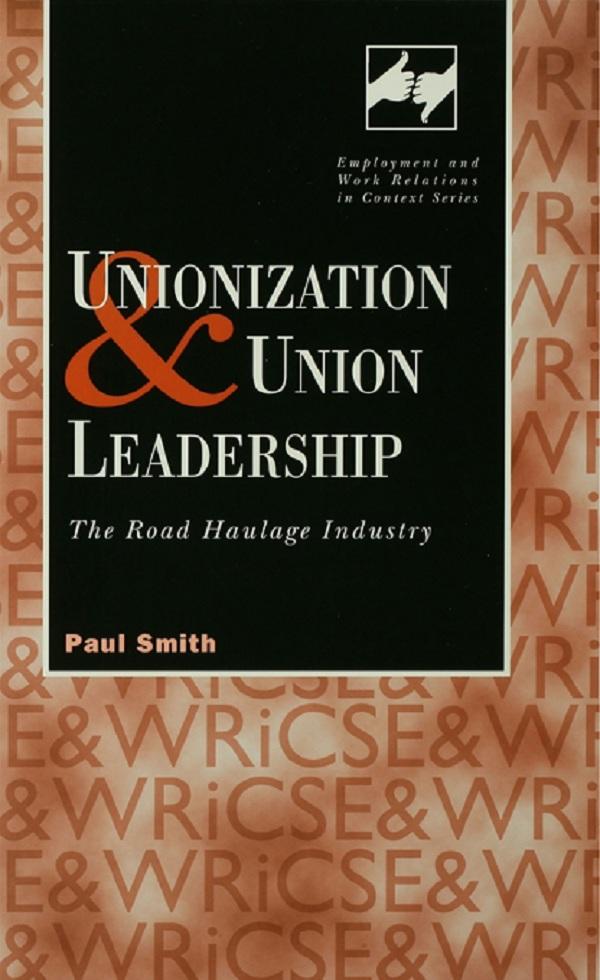
The focus of this book is the process of unionization in the road haulage industry, in particular, the role of leadership in determining the quality of union organization. It analyzes the early history of road haulage unions, the creation of the TGWU, the failure to organize the industry during the 1930s and the consequent reliance upon statutory regulation of wages and conditions, and the subsequent institutional stasis of the TGWU during the 1950s. The transformation and expansion of union organization during the period of 1963-1973, conceived as the mobilization of collective power by workers within the employment relationship, is explored in case studies of TGWU branches in Birmingham, Liverpool and London, and within the wider context of TGWU. The retrenchment of union organization as a result of recession and Conservative government legislation, 1980-1994, is explored. The book concludes with an assessment of theories of unionization and democracy, and the role of leadership, with reference to the historical development of British trade unionism. The research utilizes oral and documentary sources, including hitherto unused archives of the TGWU and the Road Haulage Association.
Betal nemt med kort, Klarna, Apple Pay eller Google Pay. Ikke tilfreds? Du har altid 14 dages fortrydelsesret. Læs mere i vores vilkår. Har du spørgsmål, så send os en mail på hello@memmo.org.
Memmo gør det nemmere at studere – uanset hvor du er i verden. Hos os samler du dine kursusbøger og smarte studieværktøjer ét sted: resuméer, quizzer, podcasts og flashcards. Og så er der Ted, din studieven, der svarer på alt, du undrer dig over. Over 50 000 studerende studerer allerede her – bygget til at hjælpe dig med at lære hurtigere og stresse mindre.
Du kan måske også lide
Køb bogen0