
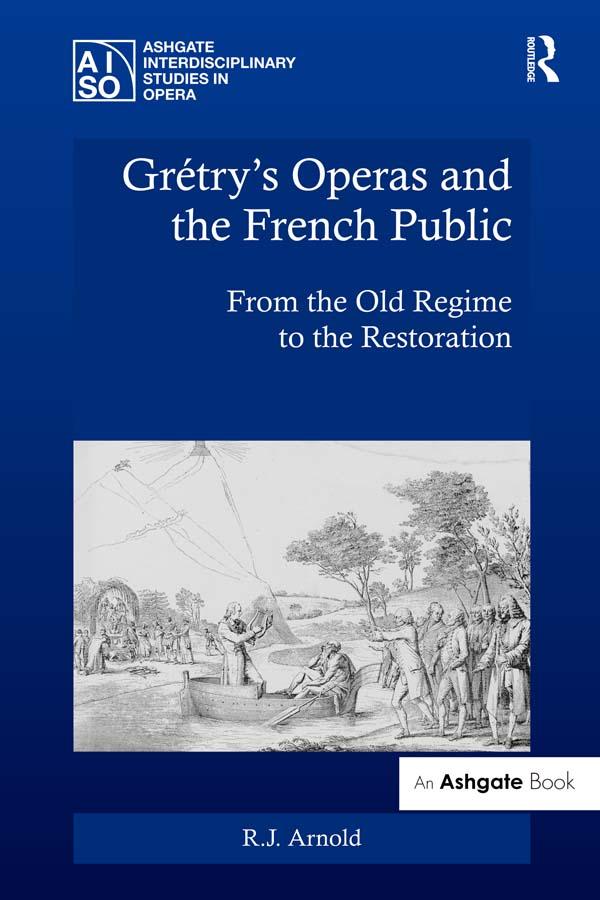
Why, in the dying days of the Napoleonic Empire, did half of Paris turn out for the funeral of a composer? The death of André Ernest Modeste Grétry in 1813 was one of the sensations of the age, setting off months of tear-stained commemorations, reminiscences and revivals of his work. To understand this singular event, this interdisciplinary study looks back to Grétry’s earliest encounters with the French public during the 1760s and 1770s, seeking the roots of his reputation in the reactions of his listeners. The result is not simply an exploration of the relationship between a musician and his audiences, but of developments in musical thought and discursive culture, and of the formation of public opinion over a period of intense social and political change. The core of Grétry’s appeal was his mastery of song. Distinctive, direct and memorable, his melodies were exported out of the opera house into every corner of French life, serving as folkloristic tokens of celebration and solidarity, longing and regret. Grétry’s attention to the subjectivity of his audiences had a profound effect on operatic culture, forging a new sense of democratic collaboration between composer and listener. This study provides a reassessment of Grétry’s work and musical thought, positioning him as a major figure who linked the culture of feeling and the culture of reason - and who paved the way for Romantic notions of spectatorial absorption and the power of music.
Betal nemt med kort, Klarna, Apple Pay eller Google Pay. Ikke tilfreds? Du har altid 14 dages fortrydelsesret. Læs mere i vores vilkår. Har du spørgsmål, så send os en mail på hello@memmo.org.
Memmo gør det nemmere at studere – uanset hvor du er i verden. Hos os samler du dine kursusbøger og smarte studieværktøjer ét sted: resuméer, quizzer, podcasts og flashcards. Og så er der Ted, din studieven, der svarer på alt, du undrer dig over. Over 50 000 studerende studerer allerede her – bygget til at hjælpe dig med at lære hurtigere og stresse mindre.