
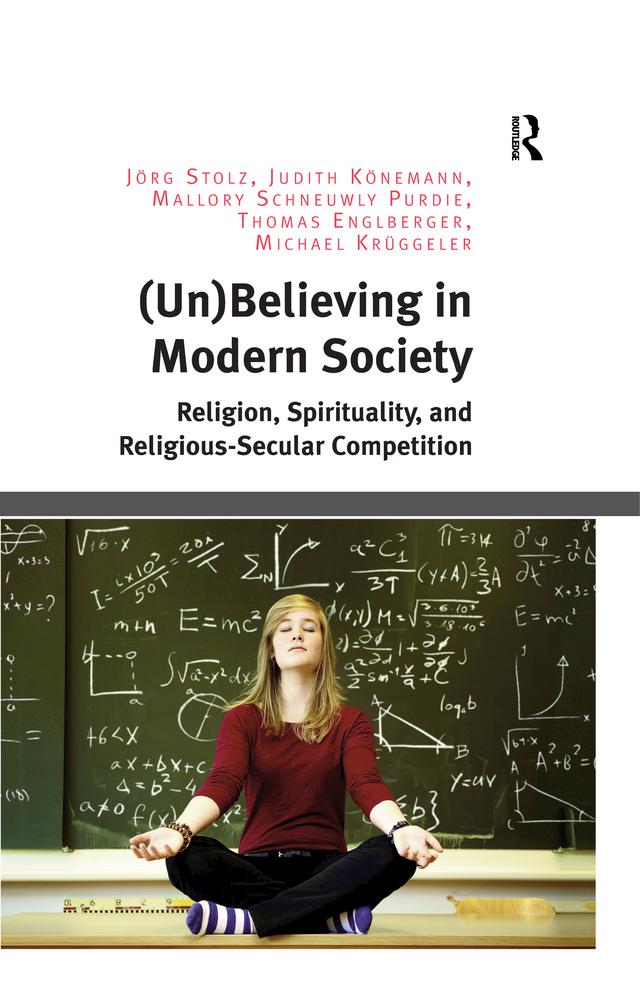
This landmark study in the sociology of religion sheds new light on the question of what has happened to religion and spirituality since the 1960s in modern societies. Exposing several analytical weaknesses of today's sociology of religion, (Un)Believing in Modern Society presents a new theory of religious-secular competition and a new typology of ways of being religious/secular. The authors draw on a specific European society (Switzerland) as their test case, using both quantitative and qualitative methodologies to show how the theory can be applied. Identifying four ways of being religious/secular in a modern society: 'institutional', 'alternative', 'distanced' and 'secular' they show how and why these forms have emerged as a result of religious-secular competition and describe in what ways all four forms are adapted to the current, individualized society.
Betal nemt med kort, Klarna, Apple Pay eller Google Pay. Ikke tilfreds? Du har altid 14 dages fortrydelsesret. Læs mere i vores vilkår. Har du spørgsmål, så send os en mail på hello@memmo.org.
Memmo gør det nemmere at studere – uanset hvor du er i verden. Hos os samler du dine kursusbøger og smarte studieværktøjer ét sted: resuméer, quizzer, podcasts og flashcards. Og så er der Ted, din studieven, der svarer på alt, du undrer dig over. Over 50 000 studerende studerer allerede her – bygget til at hjælpe dig med at lære hurtigere og stresse mindre.