
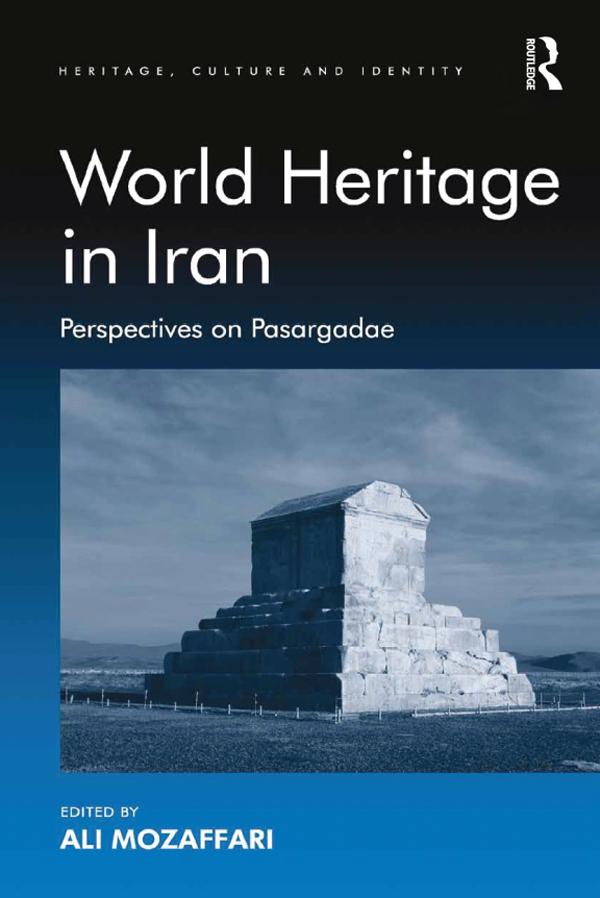
Pasargadae is the location of the tomb of Cyrus the Great, founder of the Achaemenid Empire. Through the ages it was Islamised and the tomb was ascribed to the Mother of Solomon. It was only at the beginning of the twentieth century that archaeological evidence demonstrated the relationship between the site and Cyrus and it was appropriated into conflicting political discourses on nationalism and Islamism while concurrently acknowledged as a national and then a World Heritages site. However, Pasargadae is neither an isolated World Heritage site, nor purely a symbol of abstract state politics. Pasargadae and its immediate vicinity constitute a living landscape occupied by villagers, nomads and tourists. This edited volume presents for the first time a broad, multi-disciplinary examination of Pasargadae by experts from both outside and within Iran. It specifically focuses on those disciplines that are absent from existing studies, such as ethnography, tourism and museum studies providing valuable insights into this fascinating place. In its totality, the book argues that to understand World Heritage sites and their problems fully, a holistic approach should be adopted, which considers the manifold of perspectives and issues. It also puts forward a novel approach to the question of heritage, representation and construction of collective identity from the framework of place.
Betal nemt med kort, Klarna, Apple Pay eller Google Pay. Ikke tilfreds? Du har altid 14 dages fortrydelsesret. Læs mere i vores vilkår. Har du spørgsmål, så send os en mail på hello@memmo.org.
Memmo gør det nemmere at studere – uanset hvor du er i verden. Hos os samler du dine kursusbøger og smarte studieværktøjer ét sted: resuméer, quizzer, podcasts og flashcards. Og så er der Ted, din studieven, der svarer på alt, du undrer dig over. Over 50 000 studerende studerer allerede her – bygget til at hjælpe dig med at lære hurtigere og stresse mindre.
Du kan måske også lide
Køb bogen0