
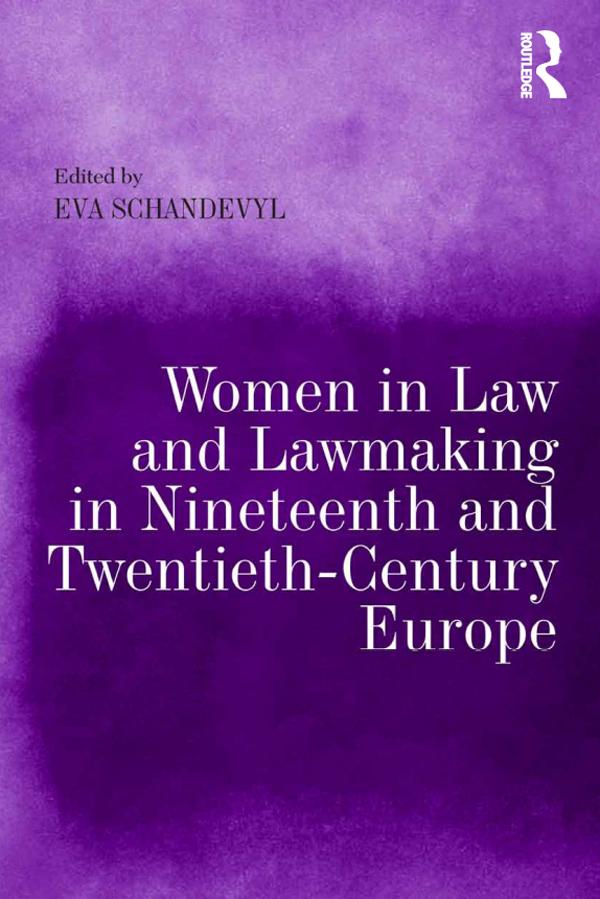
Exploring the relationship between gender and law in Europe from the nineteenth century to present, this collection examines the recent feminisation of justice, its historical beginnings and the impact of gendered constructions on jurisprudence. It looks at what influenced the breakthrough of women in the judicial world and what gender factors determine the position of women at the various levels of the legal system. Every chapter in this book addresses these issues either from the point of view of women's legal history, or from that of gendered legal cultures. With contributions from scholars with expertise in the major regions of Europe, this book demonstrates a commitment to a methodological framework that is sensitive to the intersection of gender theory, legal studies and public policy, and that is based on historical methodologies. As such the collection offers a valuable contribution both to women's history research, and the wider development of European legal history.
Betal nemt med kort, Klarna, Apple Pay eller Google Pay. Ikke tilfreds? Du har altid 14 dages fortrydelsesret. Læs mere i vores vilkår. Har du spørgsmål, så send os en mail på hello@memmo.org.
Memmo gør det nemmere at studere – uanset hvor du er i verden. Hos os samler du dine kursusbøger og smarte studieværktøjer ét sted: resuméer, quizzer, podcasts og flashcards. Og så er der Ted, din studieven, der svarer på alt, du undrer dig over. Over 50 000 studerende studerer allerede her – bygget til at hjælpe dig med at lære hurtigere og stresse mindre.
Du kan måske også lide
Køb bogen0