
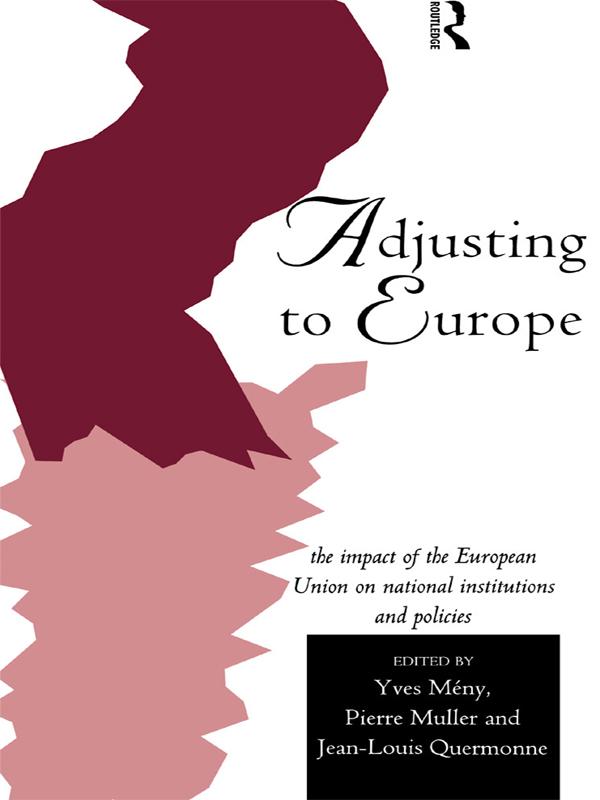
The European Union is paradoxical: it is not a state, yet it performs many traditional functions of the state. Its regulatory powers are immense but its redistributive functions are negligible; its decisions penetrate all aspects of economic and social life, yet Brussels has no local administration or tribunals, no controllers capable of guaranteeing the correct and faithful implementation of the regulations or objectives which frame European policies. Adjusting to Europe explores the means through which this paradox is confronted. It examines the nature and modalities of policy-making at Community level and discusses the implications of the specific nature of European institiutions for bargaining group mobilization and policy style. It then studies how the three major nation states have adjusted their policy processes and institutions to the European challenges. Finally, it considers the impact of community decisions in three areas: industrial, competition and social policy.
Betal nemt med kort, Klarna, Apple Pay eller Google Pay. Ikke tilfreds? Du har altid 14 dages fortrydelsesret. Læs mere i vores vilkår. Har du spørgsmål, så send os en mail på hello@memmo.org.
Memmo gør det nemmere at studere – uanset hvor du er i verden. Hos os samler du dine kursusbøger og smarte studieværktøjer ét sted: resuméer, quizzer, podcasts og flashcards. Og så er der Ted, din studieven, der svarer på alt, du undrer dig over. Over 50 000 studerende studerer allerede her – bygget til at hjælpe dig med at lære hurtigere og stresse mindre.
Du kan måske også lide
Køb bogen0