
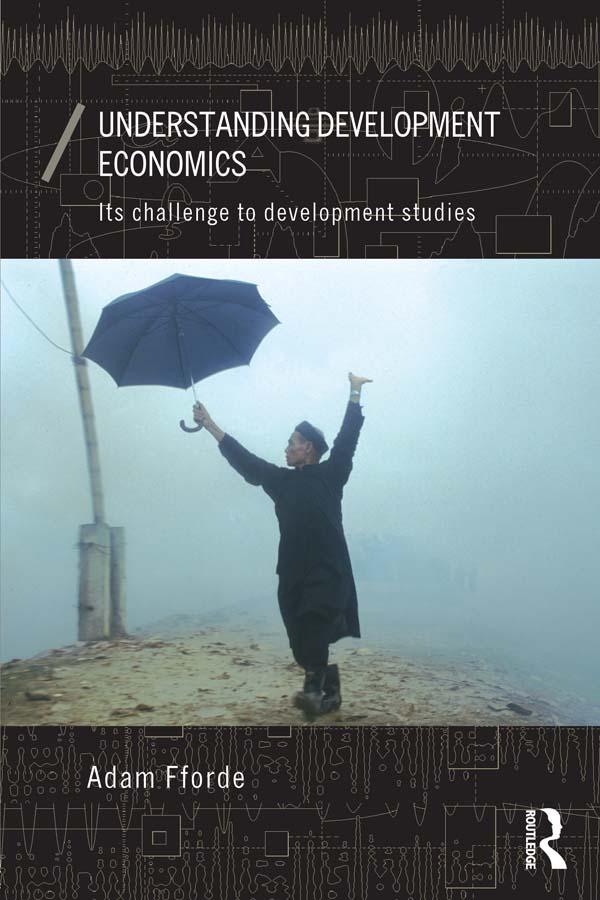
Important parts of development practice, especially in key institutions such as the World Bank, are dominated by economists. In contrast, Development Studies is largely based upon multidisciplinary work in which anthropologists, human geographers, sociologists, and others play important roles. Hence, a tension has arisen between the claims made by Development Economics to be a scientific, measurable discipline prone to wide usage of mathematical modelling, and the more discursive, practice based approach favoured by Development Studies.
The aim of this book is to show how the two disciplines have interacted, as well as how they differ. This is crucial in forming an understanding of development work, and to thinking about why policy recommendations can often lead to severe and continuing problems in developing countries.
This book introduces Development Economics to those coming from two different but linked perspectives; economists and students of development who are not economists. In both explaining and critiquing Development Economics, the book is able to suggest the implications of these findings for Development Studies, and more broadly, for development policy and its outcomes.
Betal nemt med kort, Klarna, Apple Pay eller Google Pay. Ikke tilfreds? Du har altid 14 dages fortrydelsesret. Læs mere i vores vilkår. Har du spørgsmål, så send os en mail på hello@memmo.org.
Memmo gør det nemmere at studere – uanset hvor du er i verden. Hos os samler du dine kursusbøger og smarte studieværktøjer ét sted: resuméer, quizzer, podcasts og flashcards. Og så er der Ted, din studieven, der svarer på alt, du undrer dig over. Over 50 000 studerende studerer allerede her – bygget til at hjælpe dig med at lære hurtigere og stresse mindre.