
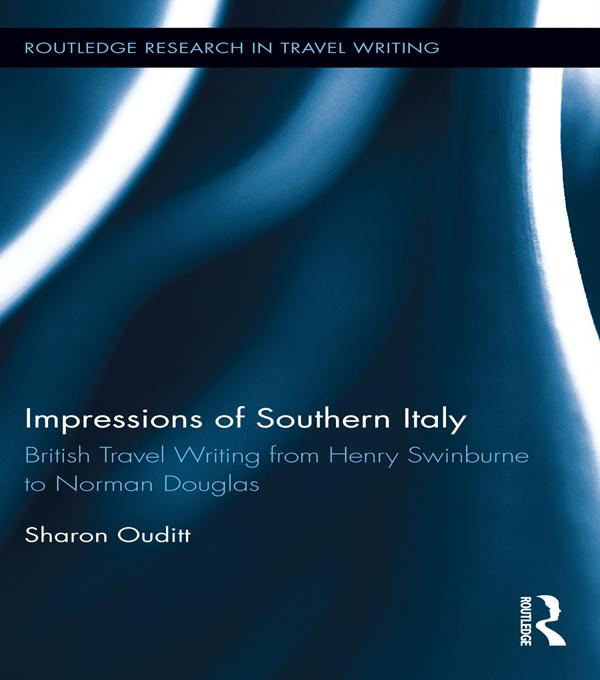
Naples was conventionally the southernmost stop of the Grand Tour beyond which, it was assumed, lay violent disorder: earthquakes, malaria, bandits, inhospitable inns, few roads and appalling food. On the other hand, Southern Italy lay at the heart of Magna Graecia, whose legends were hard-wired into the cultural imaginations of the educated.
This book studies the British travellers who visited Italy's Southern territories. Spanning the late eighteenth century to the mid-twentieth century, the author considers what these travellers discovered, not in the form of a survey, but as a series of unfolding impressions disclosing multiple Southern Italies. Of the numerous travellers analysed within this volume, the central figures are Henry Swinburne, Craufurd Tait Ramage and Norman Douglas, whose Old Calabria (1915) remains in print. Their appeal is that they take the region seriously: Southern Italy wasn't simply a testing ground for their superior sensibilities, it was a vibrant curiosity, unknown but within reach. Was the South simply behind on the road to European integration; or was it beyond a fault line, representing a viable alternative to Northern neuroses? The travelogues analysed in this book address a wide variety of themes which continue to shape discussions about European identity today.
Betal nemt med kort, Klarna, Apple Pay eller Google Pay. Ikke tilfreds? Du har altid 14 dages fortrydelsesret. Læs mere i vores vilkår. Har du spørgsmål, så send os en mail på hello@memmo.org.
Memmo gør det nemmere at studere – uanset hvor du er i verden. Hos os samler du dine kursusbøger og smarte studieværktøjer ét sted: resuméer, quizzer, podcasts og flashcards. Og så er der Ted, din studieven, der svarer på alt, du undrer dig over. Over 50 000 studerende studerer allerede her – bygget til at hjælpe dig med at lære hurtigere og stresse mindre.