
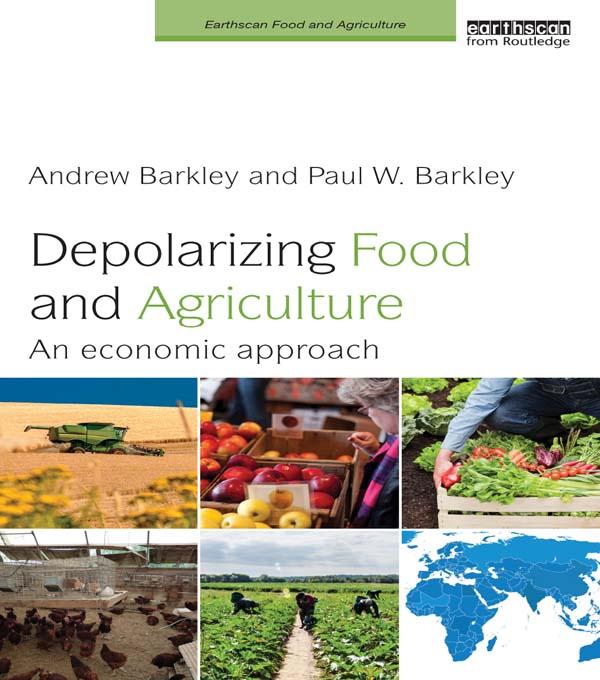
Many issues in food and agriculture are portrayed as increasingly polarized. These include industrial vs. sustainable agriculture, conventional vs. organic production methods, and global vs. local food sourcing, to name only three. This book addresses the origins, validity, consequences, and potential resolution of these and other divergences.
Political and legal actions have resulted in significant monetary and psycho-social costs for groups on both sides of these divides. Rhetoric on many issues has caused misinformation and confusion among consumers, who are unsure about the impact of their food choices on nutrition, health, the environment, animal welfare, and hunger. In some cases distrust has intensified to embitterment on both sides of many issues, and even to violence. The book uses economic principles to help readers better understand the divisiveness that prevails in the agricultural production, food processing and food retailing industries.
The authors propose solutions to promote resolution and depolarization between advocates with seemingly irreconcilable differences. A multifaceted, diverse, but targeted approach to food production and consumption is suggested to promote social well-being, and reduce or eliminate misinformation, anxiety, transaction costs and hunger.
Betal nemt med kort, Klarna, Apple Pay eller Google Pay. Ikke tilfreds? Du har altid 14 dages fortrydelsesret. Læs mere i vores vilkår. Har du spørgsmål, så send os en mail på hello@memmo.org.
Memmo gør det nemmere at studere – uanset hvor du er i verden. Hos os samler du dine kursusbøger og smarte studieværktøjer ét sted: resuméer, quizzer, podcasts og flashcards. Og så er der Ted, din studieven, der svarer på alt, du undrer dig over. Over 50 000 studerende studerer allerede her – bygget til at hjælpe dig med at lære hurtigere og stresse mindre.