
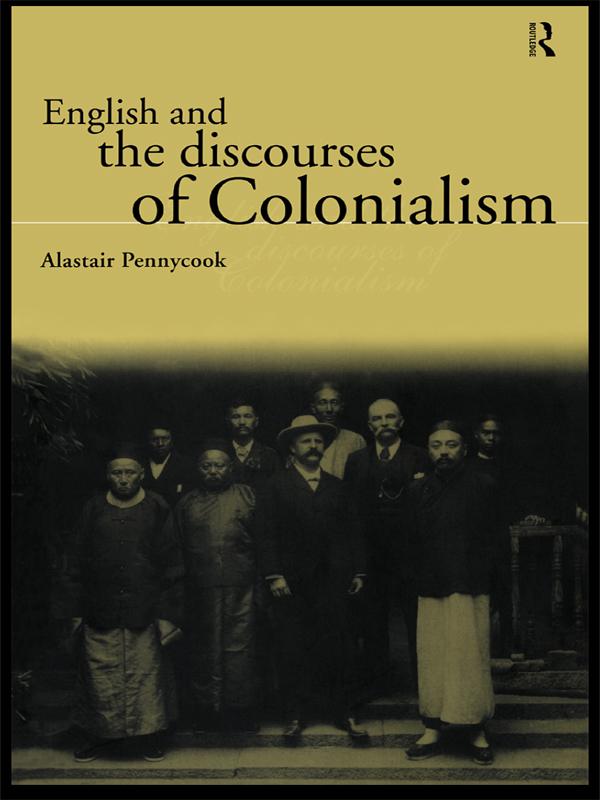
English and the Discourses of Colonialism opens with the British departure from Hong Kong marking the end of British colonialism. Yet Alastair Pennycook argues that this dramatic exit masks the crucial issue that the traces left by colonialism run deep.
This challenging and provocative book looks particularly at English, English language teaching, and colonialism. It reveals how the practice of colonialism permeated the cultures and discourses of both the colonial and colonized nations, the effects of which are still evident today. Pennycook explores the extent to which English is, as commonly assumed, a language of neutrality and global communication, and to what extent it is, by contrast, a language laden with meanings and still weighed down with colonial discourses that have come to adhere to it.
Travel writing, newspaper articles and popular books on English, are all referred to, as well as personal experiences and interviews with learners of English in India, Malaysia, China and Australia. Pennycook concludes by appealing to postcolonial writing, to create a politics of opposition and dislodge the discourses of colonialism from English.
Betal nemt med kort, Klarna, Apple Pay eller Google Pay. Ikke tilfreds? Du har altid 14 dages fortrydelsesret. Læs mere i vores vilkår. Har du spørgsmål, så send os en mail på hello@memmo.org.
Memmo gør det nemmere at studere – uanset hvor du er i verden. Hos os samler du dine kursusbøger og smarte studieværktøjer ét sted: resuméer, quizzer, podcasts og flashcards. Og så er der Ted, din studieven, der svarer på alt, du undrer dig over. Over 50 000 studerende studerer allerede her – bygget til at hjælpe dig med at lære hurtigere og stresse mindre.