
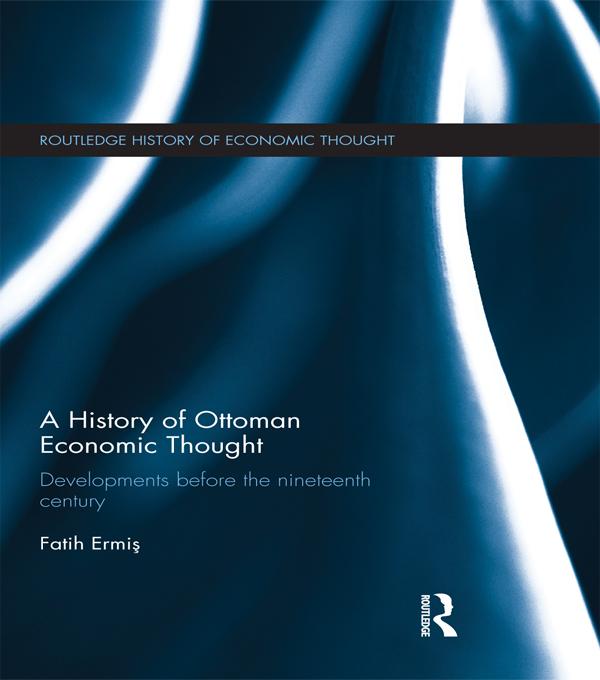
The Ottoman Empire (1299-1923) existed at the crossroads of the East and the West. Neither the history of Western Asia, nor that of Eastern Europe, can be fully understood without knowledge of the history of the Ottoman Empire.
The question is often raised of whether or not economic thinking can exist in a non-capitalistic society. In the Ottoman Empire, like in all other pre-capitalistic cultures, the economic sphere was an integral part of social life, and elements of Ottoman economic thought can frequently be found in amongst political, social and religious ideas. Ottoman economic thinking cannot, therefore, be analyzed in isolation; analysis of economic thinking can reveal aspects of the entire world view of the Ottomans.
Based on extensive archival work, this landmark volume examines Ottoman economic thinking in the classical period using three concepts: humorism, circle of justice and household economy. Basing the research upon the writings of the Ottoman elite and bureaucrats, this book explores Ottoman economic thinking starting from its own dynamics, avoiding the temptation to seek modern economic theories and approaches in the Ottoman milieu.
Betal nemt med kort, Klarna, Apple Pay eller Google Pay. Ikke tilfreds? Du har altid 14 dages fortrydelsesret. Læs mere i vores vilkår. Har du spørgsmål, så send os en mail på hello@memmo.org.
Memmo gør det nemmere at studere – uanset hvor du er i verden. Hos os samler du dine kursusbøger og smarte studieværktøjer ét sted: resuméer, quizzer, podcasts og flashcards. Og så er der Ted, din studieven, der svarer på alt, du undrer dig over. Over 50 000 studerende studerer allerede her – bygget til at hjælpe dig med at lære hurtigere og stresse mindre.