
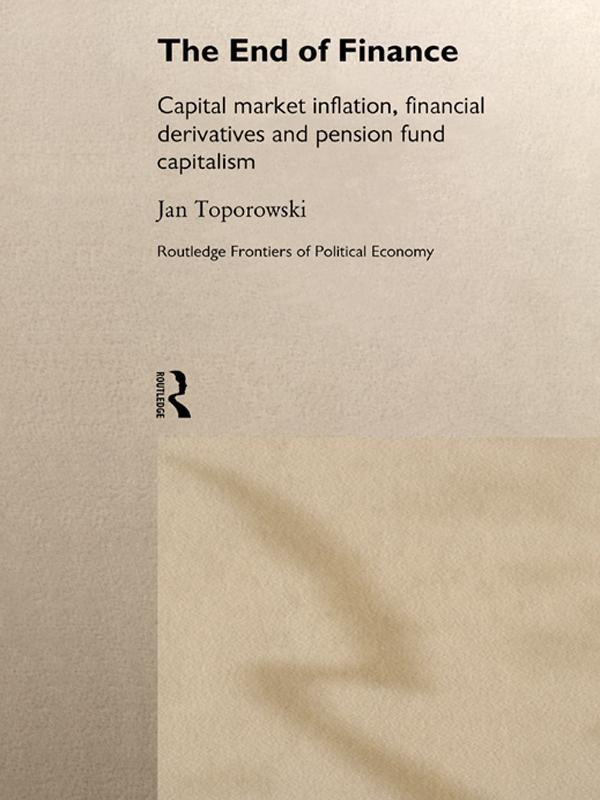
This volume develops an original critique of the belief that the present era of finance, where finance markets dominate contemporary capitalist economies, represents the best possible way of organising economic affairs. In fact, it is argued, the ensuing economic instability and inefficiency create the preconditions for the end of the dominance of finance. The End of Finance develops a theory of capital market inflation rooted in the work of Veblen, Kalecki, Keynes and Minsky, demonstrating how it disinclines productive activity on the part of firms, provides only short-term conditions that are propitious for privatisation and distorts monetary policy in the long-term. The author examines the role of pension fund schemes and financial derivatives in transmitting capital market inflation and provides a nuanced analysis of the contradictory role they play in the financial system. Capital market inflation is also examined in its historical context and compared with past inflations, in particular the South Sea and Mississippi Bubbles, which spawned the first financial derivatives, and the first privatisations. This broad historical vision allows us to see these forms of inflation as temporary and provisional in character.
Betal nemt med kort, Klarna, Apple Pay eller Google Pay. Ikke tilfreds? Du har altid 14 dages fortrydelsesret. Læs mere i vores vilkår. Har du spørgsmål, så send os en mail på hello@memmo.org.
Memmo gør det nemmere at studere – uanset hvor du er i verden. Hos os samler du dine kursusbøger og smarte studieværktøjer ét sted: resuméer, quizzer, podcasts og flashcards. Og så er der Ted, din studieven, der svarer på alt, du undrer dig over. Over 50 000 studerende studerer allerede her – bygget til at hjælpe dig med at lære hurtigere og stresse mindre.