
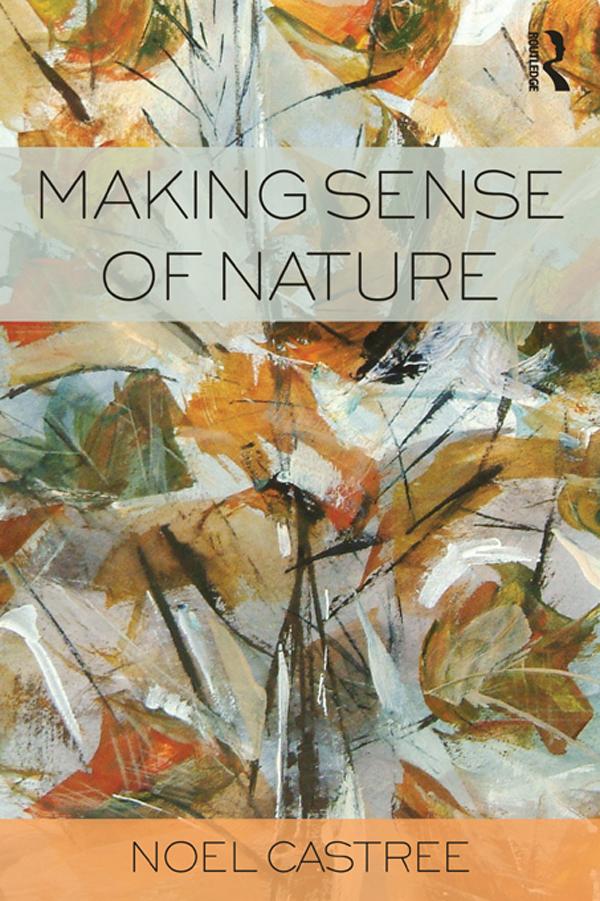
We listen to a cacophony of voices instructing us how to think and feel about nature, including our own bodies. The news media, wildlife documentaries, science magazines, and environmental NGOs are among those clamouring for our attention. But are we empowered by all this knowledge or is our dependence on various communities allowing our thoughts, sentiments and activities to be unduly governed by others?
Making Sense of Nature shows that what we call ‘nature’ is made sense of for us in ways that make it central to social order, social change and social dissent. By utilising insights and extended examples from anthropology, cultural studies, human geography, philosophy, politics, sociology, science studies, this interdisciplinary text asks whether we can better make sense of nature for ourselves, and thus participate more meaningfully in momentous decisions about the future of life – human and non-human – on the planet. This book shows how ‘nature’ can be made sense of without presuming its naturalness. The challenge is not so much to rid ourselves of the idea of nature and its ‘collateral concepts’ (such as genes) but instead, we need to be more alert to how, why and with what effects ideas about ‘nature’ get fashioned and deployed in specific situations. Among other things, the book deals with science and scientists, the mass media and journalists, ecotourism, literature and cinema, environmentalists, advertising and big business.
This innovative text contains numerous case studies and examples from daily life to put theory and subject matter into context, as well as study tasks, a glossary and suggested further reading. The case studies cover a range of topics, range from forestry in Canada and Guinea, to bestiality in Washington State, to how human genetics is reported in Western newspapers, to participatory science experiments in the UK. Making Sense of Nature will empower readers from a wide range of fields across the social sciences, humanities and physical sciences.
Betal nemt med kort, Klarna, Apple Pay eller Google Pay. Ikke tilfreds? Du har altid 14 dages fortrydelsesret. Læs mere i vores vilkår. Har du spørgsmål, så send os en mail på hello@memmo.org.
Memmo gør det nemmere at studere – uanset hvor du er i verden. Hos os samler du dine kursusbøger og smarte studieværktøjer ét sted: resuméer, quizzer, podcasts og flashcards. Og så er der Ted, din studieven, der svarer på alt, du undrer dig over. Over 50 000 studerende studerer allerede her – bygget til at hjælpe dig med at lære hurtigere og stresse mindre.