
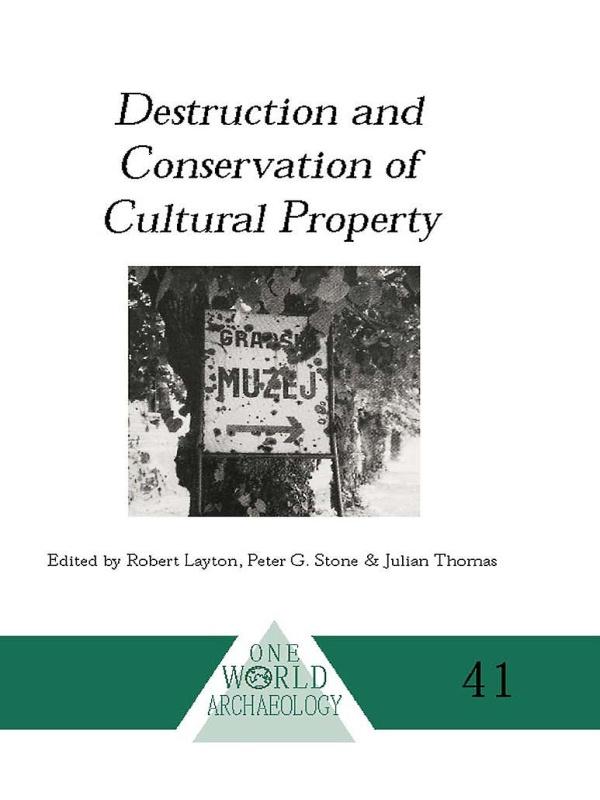
In 1991 the mosque at Ayodhya in India was demolished by Hindu fundamentalists who claim that it stood on the birthplace of a legendary Hindu hero. During recent conflicts in former Yugoslavia, ethnic groups destroyed mosques and churches to eliminate evidence of long-term settlement by other communities. Over successive centuries, however, a single building in Cordoba functioned as a mosque, a church and a synagogue. The Roman Emperor Diocletian's Palace in Split is occupied today by shops and residential apartments. What circumstances have lead to the survival and reinterpretation of some monuments, but the destruction of others?
This work asks whether the idea of world heritage is an essential mechanism for the protection of the world's cultural and natural heritage, or whether it subjugates a diversity of cultural traditions to specifically Western ideas. How far is it acceptable for one group of people to comment upon, or intercede in, the way in which another community treats the remains which it claims as its own? What are the responsibilities of multinational corporations and non-governmental organisations operating in the Developing World? Who actually owns the past: the landowner, indigenous people, the State or humankind?
Betal nemt med kort, Klarna, Apple Pay eller Google Pay. Ikke tilfreds? Du har altid 14 dages fortrydelsesret. Læs mere i vores vilkår. Har du spørgsmål, så send os en mail på hello@memmo.org.
Memmo gør det nemmere at studere – uanset hvor du er i verden. Hos os samler du dine kursusbøger og smarte studieværktøjer ét sted: resuméer, quizzer, podcasts og flashcards. Og så er der Ted, din studieven, der svarer på alt, du undrer dig over. Over 50 000 studerende studerer allerede her – bygget til at hjælpe dig med at lære hurtigere og stresse mindre.
Du kan måske også lide
Køb bogen0