
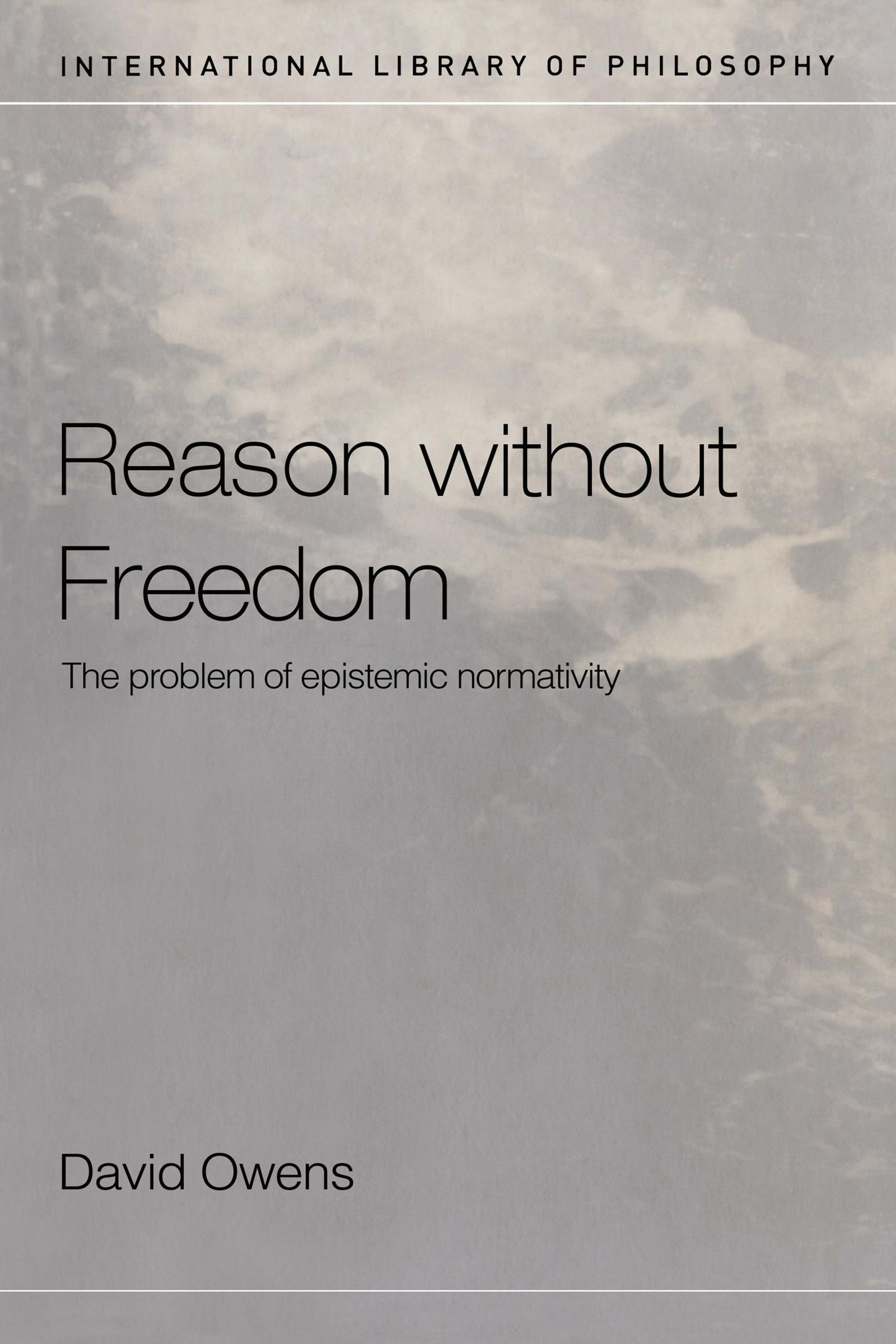
We call beliefs reasonable or unreasonable, justified or unjustified. What does this imply about belief? Does this imply that we are responsible for our beliefs and that we should be blamed for our unreasonable convictions? Or does it imply that we are in control of our beliefs and that what we believe is up to us? Reason Without Freedom argues that the major problems of epistemology have their roots in concerns about our control over and responsibility for belief. David Owens focuses on the arguments of Descartes, Locke and Hume - the founders of epistemology - and presents a critical discussion of the current trends in contemporary epistemology. He proposes that the problems we confront today - scepticism, the analysis of knowlege, and debates on epistemic justification - can be tackled only once we have understood the moral psychology of belief. This can be resolved when we realise that our responsibility for beliefs is profoundly different from our rationality and agency, and that memory and testimony can preserve justified belief without preserving the evidence which might be used to justify it. Reason Without Freedom should be of value to those interested in contemporary epistemology, philosophy of mind and action, ethics, and the history of 17th and 18th century.
Betal nemt med kort, Klarna, Apple Pay eller Google Pay. Ikke tilfreds? Du har altid 14 dages fortrydelsesret. Læs mere i vores vilkår. Har du spørgsmål, så send os en mail på hello@memmo.org.
Memmo gør det nemmere at studere – uanset hvor du er i verden. Hos os samler du dine kursusbøger og smarte studieværktøjer ét sted: resuméer, quizzer, podcasts og flashcards. Og så er der Ted, din studieven, der svarer på alt, du undrer dig over. Over 50 000 studerende studerer allerede her – bygget til at hjælpe dig med at lære hurtigere og stresse mindre.
Du kan måske også lide
Køb bogen0