
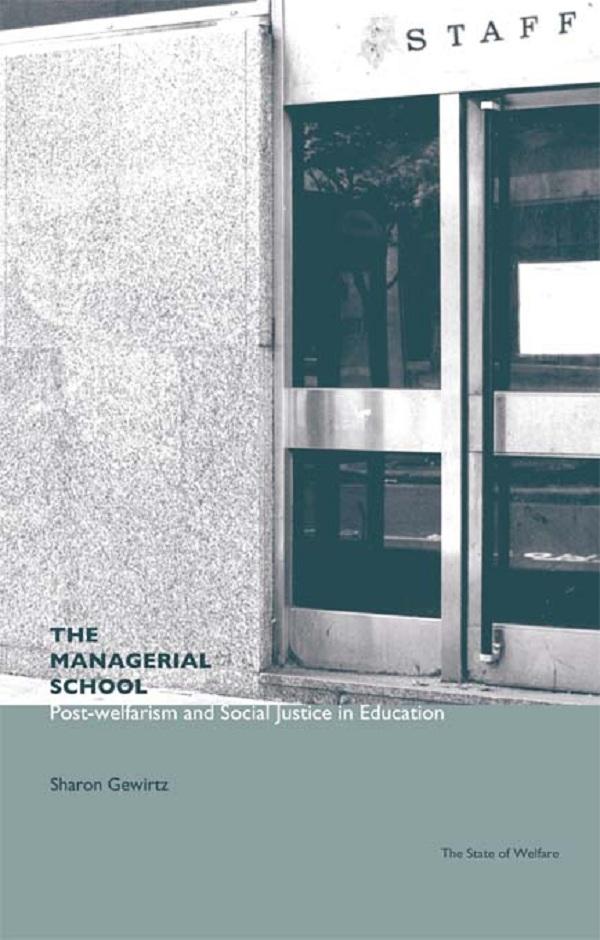
The relationship between welfare and the state has undergone a sustained process of reconfiguration over the past two decades and managerialism has played a key role in this process. In education, parents are now seen as consumers and schools as small businesses, their income dependent on their success in attracting customers within competitive local 'markets'.
At the same time, management practices borrowed from business, such as target setting and performance monitoring, now play a key role in regulating schools.
What kinds of schools are the reforms producing? What impact are they having on school culture and values? What are the social justice implications of applying a business model to the provision of schooling?
In The Managerial School Sharon Gerwirtz draws on in-depth interviews with teachers in a range of secondary schools and close observation of school practices to try to answer these questions.Through a comparison of Conservative and New Labour policies, she argues that New Labour's 'third way' for education is a contradictory mix of neo-liberal, authoritarian and humanistic strands that is not in any real sense a new educational settlement.
This empirically based account of over a decade of education reform offers a unique insight into the effects of managerialism on schools and a hard-hitting analysis of the inherent tensions in a system that undoubtedly perpetrates social injustice.
Betal nemt med kort, Klarna, Apple Pay eller Google Pay. Ikke tilfreds? Du har altid 14 dages fortrydelsesret. Læs mere i vores vilkår. Har du spørgsmål, så send os en mail på hello@memmo.org.
Memmo gør det nemmere at studere – uanset hvor du er i verden. Hos os samler du dine kursusbøger og smarte studieværktøjer ét sted: resuméer, quizzer, podcasts og flashcards. Og så er der Ted, din studieven, der svarer på alt, du undrer dig over. Over 50 000 studerende studerer allerede her – bygget til at hjælpe dig med at lære hurtigere og stresse mindre.