
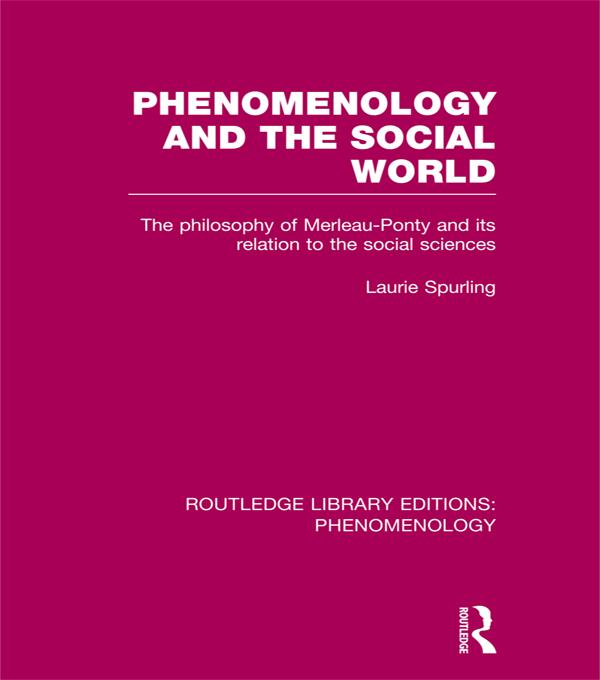
The term ‘phenomenology’ has become almost as over-used and emptied of meaning as that other word from Continental Philosophy, namely ‘existentialism’. Yet Husserl, who first put forward the phenomenological method, considered it a rigorous alternative to positivism, and in the hands of Merleau-Ponty, a disciple of Husserl in France, phenomenology became a way of gaining a disciplined and coherent perspective on the world in which we live.
When this study originally published in 1977 there were only a few books in English on Merleau-Ponty’s philosophy. It introduced the reader and suggested how his thought might throw light on some of the assumptions and presuppositions of certain contemporary forms of Anglo-Saxon philosophy and social science. It also demonstrates how phenomenology seeks to unite philosophy and social science, rather than define them as mutually exclusive domains of knowledge.
Betal nemt med kort, Klarna, Apple Pay eller Google Pay. Ikke tilfreds? Du har altid 14 dages fortrydelsesret. Læs mere i vores vilkår. Har du spørgsmål, så send os en mail på hello@memmo.org.
Memmo gør det nemmere at studere – uanset hvor du er i verden. Hos os samler du dine kursusbøger og smarte studieværktøjer ét sted: resuméer, quizzer, podcasts og flashcards. Og så er der Ted, din studieven, der svarer på alt, du undrer dig over. Over 50 000 studerende studerer allerede her – bygget til at hjælpe dig med at lære hurtigere og stresse mindre.