
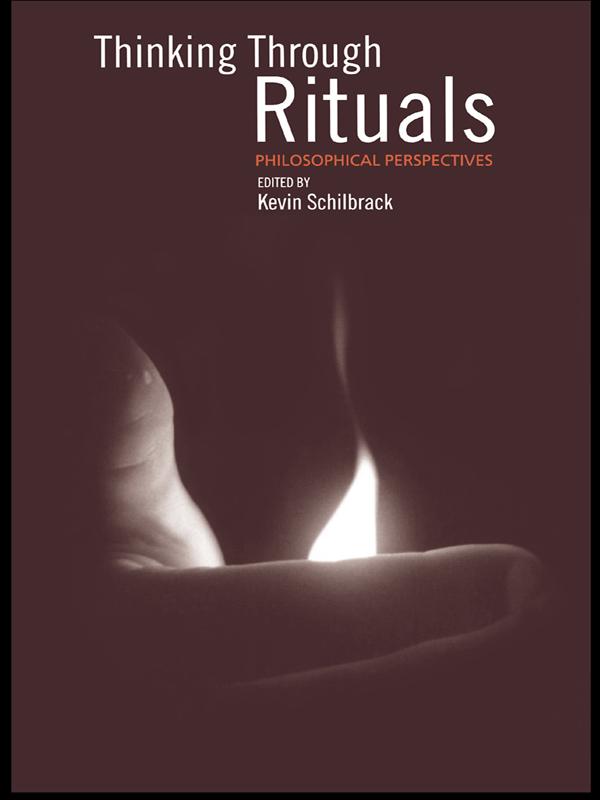
Many philosophical approaches today seek to overcome the division between mind and body. If such projects succeed, then thinking is not restricted to the disembodied mind, but is in some sense done through the body. From a post-Cartesian perspective, then, ritual activities that discipline the body are not just thoughtless motions, but crucial parts of the way people think.
Thinking Through Rituals explores religious ritual acts and their connection to meaning and truth, belief, memory, inquiry, worldview and ethics. Drawing on philosophers such as Foucault, Merleau-Ponty and Wittgenstein, and sources from cognitive science, pragmatism and feminist theory, it provides philosophical resources for understanding religious ritual practices like the Christian Eucharistic ceremony, Hatha Yoga, sacred meditation or liturgical speech.
Its essays consider a wide variety of rituals in Christianity, Judaism, Hinduism and Buddhism - including political protest rituals and gay commitment ceremonies, traditional Vedic and Yogic rites, Christian and Buddhist meditation and the Jewish Shabbat. They challenge the traditional disjunction between thought and action, showing how philosophy can help to illuminate the relationship between doing and meaning which ritual practices imply.
Betal nemt med kort, Klarna, Apple Pay eller Google Pay. Ikke tilfreds? Du har altid 14 dages fortrydelsesret. Læs mere i vores vilkår. Har du spørgsmål, så send os en mail på hello@memmo.org.
Memmo gør det nemmere at studere – uanset hvor du er i verden. Hos os samler du dine kursusbøger og smarte studieværktøjer ét sted: resuméer, quizzer, podcasts og flashcards. Og så er der Ted, din studieven, der svarer på alt, du undrer dig over. Over 50 000 studerende studerer allerede her – bygget til at hjælpe dig med at lære hurtigere og stresse mindre.