
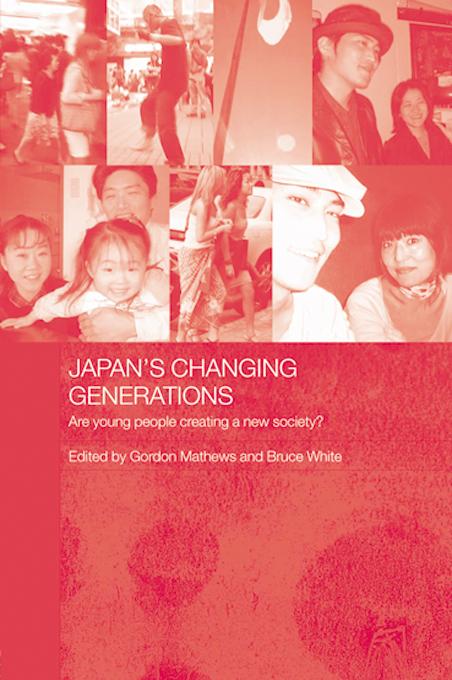
This book argues that 'the generation gap' in Japan is something more than young people resisting the adult social order before entering and conforming to that order. Rather, it signifies something more fundamental: the emergence of a new Japan, which may be quite different from the Japan of postwar decades. It argues that while young people in Japan in their teens, twenties and early thirties are not engaged in overt social or political resistance, they are turning against the existing Japanese social order, whose legitimacy has been undermined by the past decade of economic downturn. The book shows how young people in Japan are thinking about their bodies and identities, their social relationships, and their employment and parenting, in new and generationally contextual ways, that may help to create a future Japan quite different from Japan of the recent past.
Betal nemt med kort, Klarna, Apple Pay eller Google Pay. Ikke tilfreds? Du har altid 14 dages fortrydelsesret. Læs mere i vores vilkår. Har du spørgsmål, så send os en mail på hello@memmo.org.
Memmo gør det nemmere at studere – uanset hvor du er i verden. Hos os samler du dine kursusbøger og smarte studieværktøjer ét sted: resuméer, quizzer, podcasts og flashcards. Og så er der Ted, din studieven, der svarer på alt, du undrer dig over. Over 50 000 studerende studerer allerede her – bygget til at hjælpe dig med at lære hurtigere og stresse mindre.
Du kan måske også lide
Køb bogen0