
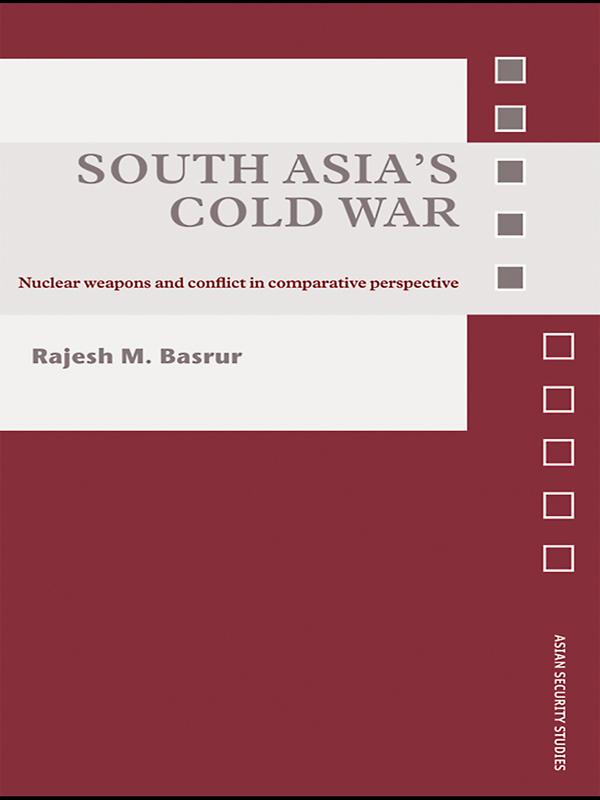
This book is a ground-breaking analysis of the India-Pakistan nuclear confrontation as a form of ‘cold war’ – that is, a hostile relationship between nuclear rivals.
Drawing on nuclear rivalries between similar pairs (United States-Soviet Union, United States-China, Soviet Union-China, and United States-North Korea), the work examines the rise, process and potential end of the cold war between India and Pakistan. It identifies the three factors driving the India-Pakistan rivalry: ideational factors stemming from partition; oppositional roles created by the distribution of power in South Asia; and the particular kind of relationship created by nuclear weapons. The volume assesses why India and Pakistan continue in non-crisis times to think about power and military force in outmoded ways embedded in pre-nuclear times, and draws lessons applicable to them as well as to other contemporary nuclear powers and states that might be engaged in future cold wars.
Betal nemt med kort, Klarna, Apple Pay eller Google Pay. Ikke tilfreds? Du har altid 14 dages fortrydelsesret. Læs mere i vores vilkår. Har du spørgsmål, så send os en mail på hello@memmo.org.
Memmo gør det nemmere at studere – uanset hvor du er i verden. Hos os samler du dine kursusbøger og smarte studieværktøjer ét sted: resuméer, quizzer, podcasts og flashcards. Og så er der Ted, din studieven, der svarer på alt, du undrer dig over. Over 50 000 studerende studerer allerede her – bygget til at hjælpe dig med at lære hurtigere og stresse mindre.