
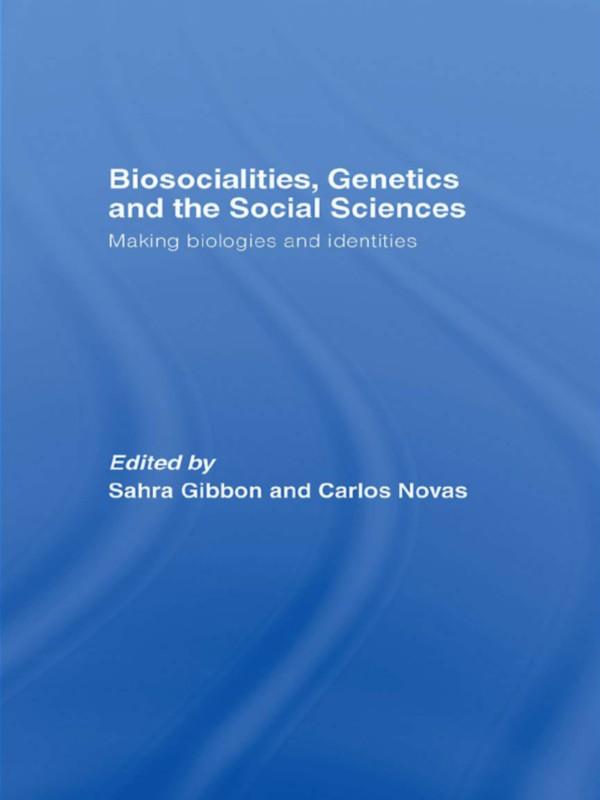
Biosocialities, Genetics and the Social Sciences explores the social, cultural and economic transformations that result from innovations in genomic knowledge and technology.
This pioneering collection uses Paul Rabinow’s concept of biosociality to chart the shifts in social relations and ideas about nature, biology and identity brought about by developments in biomedicine. Based on new empirical research, it contains chapters on genomic research into embryonic stem cell therapy, breast cancer, autism, Parkinson’s and IVF treatment, as well as on the expectations and education surrounding genomic research.
It covers four main themes:
- novel modes of identity and identification, such as genetic citizenship
- the role of institutions, ranging from disease advocacy organizations and voluntary organizations to the state
- the production of biological knowledge, novel life-forms, and technologies
- the generation of wealth and commercial interests in biology.
Including an afterword by Paul Rabinow and case studies on the UK, US, Canada, Germany, India and Israel, this book is key reading for students and researchers of the new genetics and the social sciences – particularly medical sociologists, medical anthropologists and those involved with science and technology studies.
Betal nemt med kort, Klarna, Apple Pay eller Google Pay. Ikke tilfreds? Du har altid 14 dages fortrydelsesret. Læs mere i vores vilkår. Har du spørgsmål, så send os en mail på hello@memmo.org.
Memmo gør det nemmere at studere – uanset hvor du er i verden. Hos os samler du dine kursusbøger og smarte studieværktøjer ét sted: resuméer, quizzer, podcasts og flashcards. Og så er der Ted, din studieven, der svarer på alt, du undrer dig over. Over 50 000 studerende studerer allerede her – bygget til at hjælpe dig med at lære hurtigere og stresse mindre.