
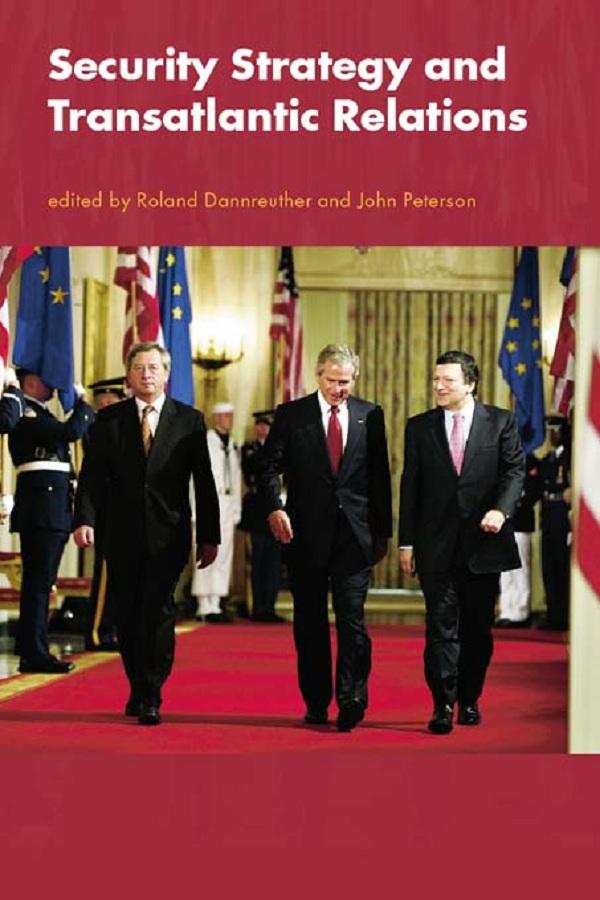
In this much-needed study of current strategic thinking on both sides of the Atlantic, a diverse collection of leading European and American analysts are assembled to tackle key questions that remain unanswered in the existing literature:
- how much do new security strategies signal convergence or divergence in US and EU foreign and security policy doctrine?
- what tangible political and policy impacts can be attributed to new security strategies?
- what are the implications for US and EU policies towards specific regions?
- what are the prospects for collective transatlantic action?
The legacy of 9/11 is scrutinized against the backdrop of the strategic thinking that preceded it. In the 1990s, the US struggled to develop a new doctrine for American foreign policy, seeking at various times to promote a ‘New World Order’ or ‘democratic enlargement’. For its part, the EU had tried to underpin its new Common Foreign and Security Policy with a coherent set of ‘European values’ – multilateralism, human rights, environmental protection, and poverty reduction – that were best defended via collective European action. Key continuities and changes in these transatlantic efforts since 9/11 are clearly identified and closely examined.
Betal nemt med kort, Klarna, Apple Pay eller Google Pay. Ikke tilfreds? Du har altid 14 dages fortrydelsesret. Læs mere i vores vilkår. Har du spørgsmål, så send os en mail på hello@memmo.org.
Memmo gør det nemmere at studere – uanset hvor du er i verden. Hos os samler du dine kursusbøger og smarte studieværktøjer ét sted: resuméer, quizzer, podcasts og flashcards. Og så er der Ted, din studieven, der svarer på alt, du undrer dig over. Over 50 000 studerende studerer allerede her – bygget til at hjælpe dig med at lære hurtigere og stresse mindre.