
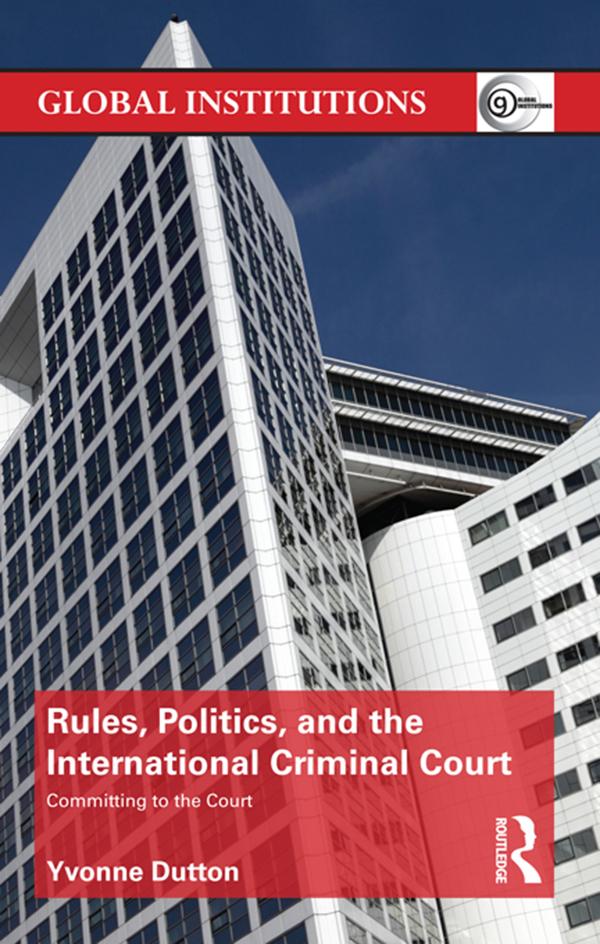
In this new work, Dutton examines the ICC and whether and how its enforcement mechanism influences state membership and the court’s ability to realize treaty goals, examining questions such as:
- Why did states decide to create the ICC and design the institution with this uniquely strong enforcement mechanism?
- Will the ICC’s enforcement mechanism be sufficient to hold states accountable to their commitment so that the ICC can realize its goal of ending impunity for genocide, crimes against humanity, and war crimes?
- Will states view the ICC’s enforcement mechanism as a credible threat and refuse to join unless they already have good domestic human rights practices and institutions that are independent and capable of prosecuting human rights abuses?
- If states that most need to improve their domestic legal practices as relates to protecting against human rights abuses do not join the court, is there any hope that the threat of punishment by the ICC can play a role in bettering state’s human rights practices and deterring individuals from committing mass atrocities?
This work provides a significant contribution to the field, and will be of great interest to students and scholars of international law, international relations, international organizations and human rights.
Betal nemt med kort, Klarna, Apple Pay eller Google Pay. Ikke tilfreds? Du har altid 14 dages fortrydelsesret. Læs mere i vores vilkår. Har du spørgsmål, så send os en mail på hello@memmo.org.
Memmo gør det nemmere at studere – uanset hvor du er i verden. Hos os samler du dine kursusbøger og smarte studieværktøjer ét sted: resuméer, quizzer, podcasts og flashcards. Og så er der Ted, din studieven, der svarer på alt, du undrer dig over. Over 50 000 studerende studerer allerede her – bygget til at hjælpe dig med at lære hurtigere og stresse mindre.