
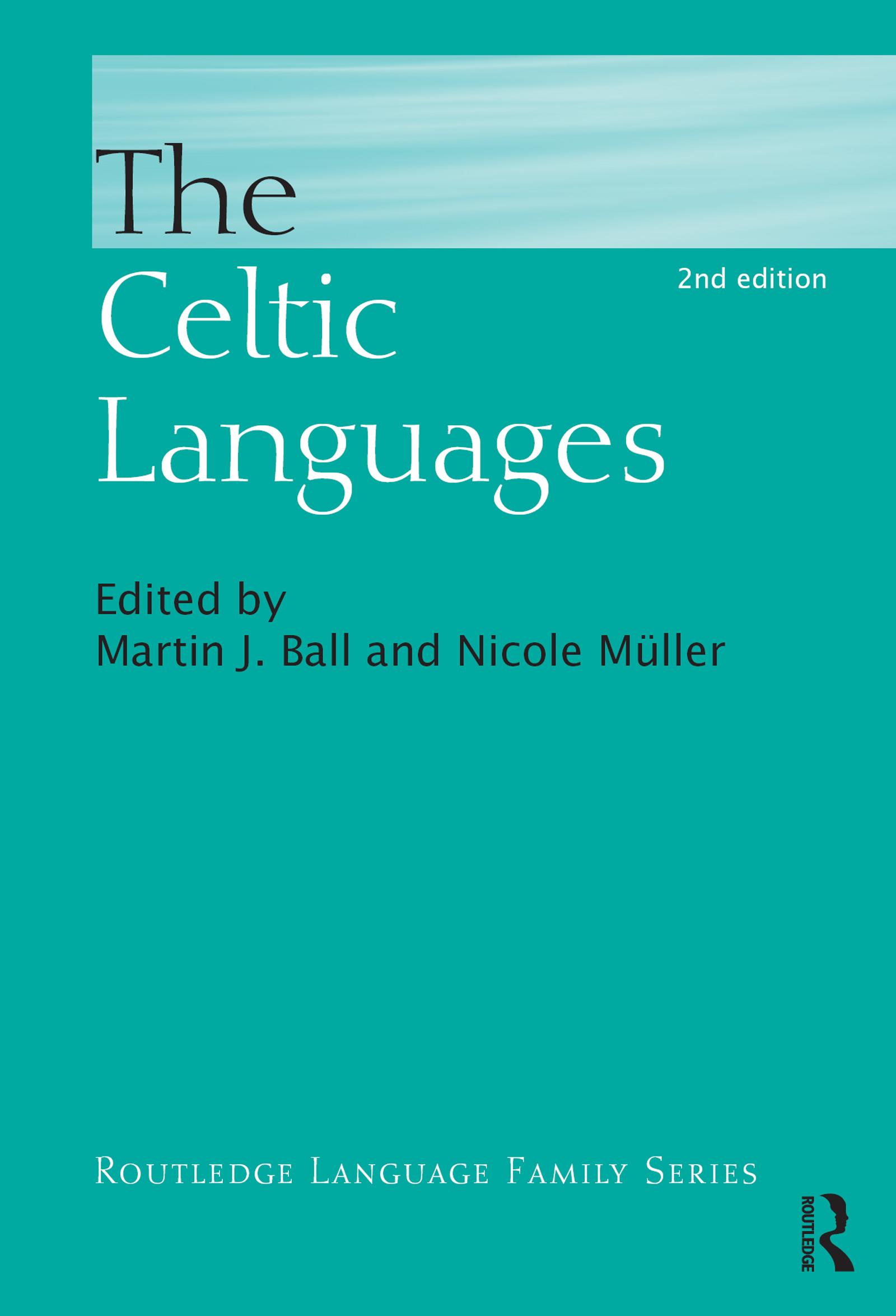
The Celtic Languages describes in depth all the Celtic languages from historical, structural and sociolinguistic perspectives with individual chapters on Irish, Scottish Gaelic, Manx, Welsh, Breton and Cornish.
This second edition has been thoroughly revised to provide a comprehensive and up-to-date account of the modern Celtic languages and their current sociolinguistic status along with complete descriptions of the historical languages.
This comprehensive volume is arranged in four parts. The first part offers a description of the typological aspects of the Celtic languages followed by a scene setting historical account of the emergence of these languages. Chapters devoted to Continental Celtic, Old and Middle Irish, and Old and Middle Welsh follow. Parts two and three are devoted to linguistic descriptions of the contemporary languages. Part two has chapters on Irish, Scots Gaelic and Manx, while Part three covers Welsh, Breton and Cornish. Part four is devoted to the sociolinguistic situation of the four contemporary Celtic languages and a final chapter describes the status of the two revived languages Cornish and Manx.
With contributions from a variety of scholars of the highest reputation, The Celtic Languages continues to be an invaluable tool for both students and teachers of linguistics, especially those with an interest in typology, language universals and the unique sociolinguistic position which the Celtic languages occupy.
Dr Martin J. Ball is Hawthorne-BoRSF Endowed Professor, and Director of the Hawthorne Research Center, at the University of Louisiana at Lafayette. Dr Ball has over 120 academic publications. Among his books are The Use of Welsh, Mutation in Welsh, and Welsh Phonetics.
Dr Nicole Müller is Hawthorne-BoRSF Endowed Professor at the University of Louisiana at Lafayette. Among her books are Mutation in Welsh, and Agents in Early Irish and Early Welsh.
Betal nemt med kort, Klarna, Apple Pay eller Google Pay. Ikke tilfreds? Du har altid 14 dages fortrydelsesret. Læs mere i vores vilkår. Har du spørgsmål, så send os en mail på hello@memmo.org.
Memmo gør det nemmere at studere – uanset hvor du er i verden. Hos os samler du dine kursusbøger og smarte studieværktøjer ét sted: resuméer, quizzer, podcasts og flashcards. Og så er der Ted, din studieven, der svarer på alt, du undrer dig over. Over 50 000 studerende studerer allerede her – bygget til at hjælpe dig med at lære hurtigere og stresse mindre.