
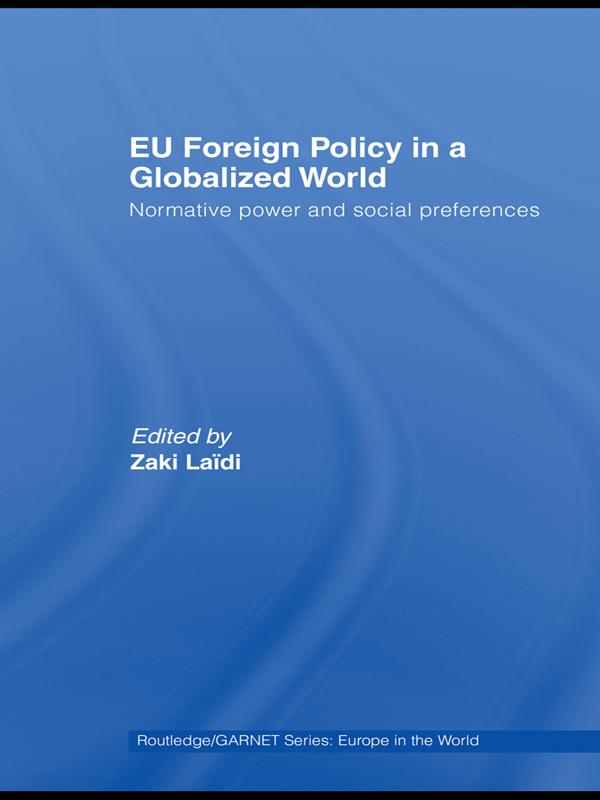
Written by leading experts in the field, this volume identifies European collective preferences and analyzes to what extent these preferences inform and shape EU foreign policy and are shared by other actors in the international system.
While studies of the EU’s foreign policy are not new, this book takes a very different tack from previous research. Specifically it leaves aside the institutional and bureaucratic dimensions of the European Union’s behaviour as an international actor in order to concentrate on the meanings and outcomes of its foreign policy taken in the broadest sense. Two outcomes are possible:
- Either Europe succeeds in imposing a norms-based international system and thus, in this case, its soft power capacity will not only have been demonstrated but will be enhanced
- Or, on the contrary, it does not succeed and the global system will become one where realpolitik reigns; especially once China, India and Russia attain a preponderant influence on the international scene.
EU Foreign Policy in a Globalized World will be of interest to students and scholars of European Union politics, foreign policy and politics and international relations in general.
Betal nemt med kort, Klarna, Apple Pay eller Google Pay. Ikke tilfreds? Du har altid 14 dages fortrydelsesret. Læs mere i vores vilkår. Har du spørgsmål, så send os en mail på hello@memmo.org.
Memmo gør det nemmere at studere – uanset hvor du er i verden. Hos os samler du dine kursusbøger og smarte studieværktøjer ét sted: resuméer, quizzer, podcasts og flashcards. Og så er der Ted, din studieven, der svarer på alt, du undrer dig over. Over 50 000 studerende studerer allerede her – bygget til at hjælpe dig med at lære hurtigere og stresse mindre.