
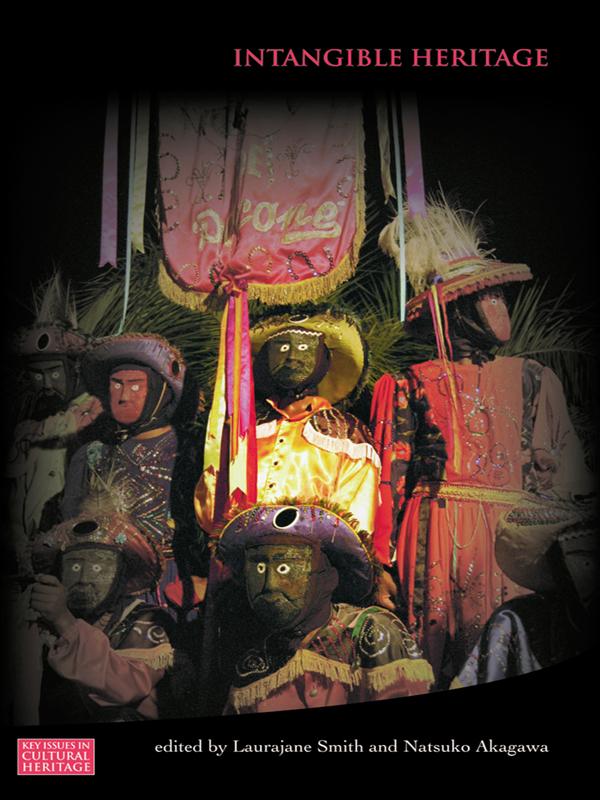
This volume examines the implications and consequences of the idea of ‘intangible heritage’ to current international academic and policy debates about the meaning and nature of cultural heritage and the management processes developed to protect it. It provides an accessible account of the different ways in which intangible cultural heritage has been defined and managed in both national and international contexts, and aims to facilitate international debate about the meaning, nature and value of not only intangible cultural heritage, but heritage more generally.
Intangible Heritage fills a significant gap in the heritage literature available and represents a significant cross section of ideas and practices associated with intangible cultural heritage. The authors brought together for this volume represent some of the key academics and practitioners working in the area, and discuss research and practices from a range of countries, including: Zimbabwe, Morocco, South Africa, Japan, Australia, United Kingdom, the Netherlands, USA, Brazil and Indonesia, and bring together a range of areas of expertise which include anthropology, law, heritage studies, archaeology, museum studies, folklore, architecture, Indigenous studies and history.
Betal nemt med kort, Klarna, Apple Pay eller Google Pay. Ikke tilfreds? Du har altid 14 dages fortrydelsesret. Læs mere i vores vilkår. Har du spørgsmål, så send os en mail på hello@memmo.org.
Memmo gør det nemmere at studere – uanset hvor du er i verden. Hos os samler du dine kursusbøger og smarte studieværktøjer ét sted: resuméer, quizzer, podcasts og flashcards. Og så er der Ted, din studieven, der svarer på alt, du undrer dig over. Over 50 000 studerende studerer allerede her – bygget til at hjælpe dig med at lære hurtigere og stresse mindre.