
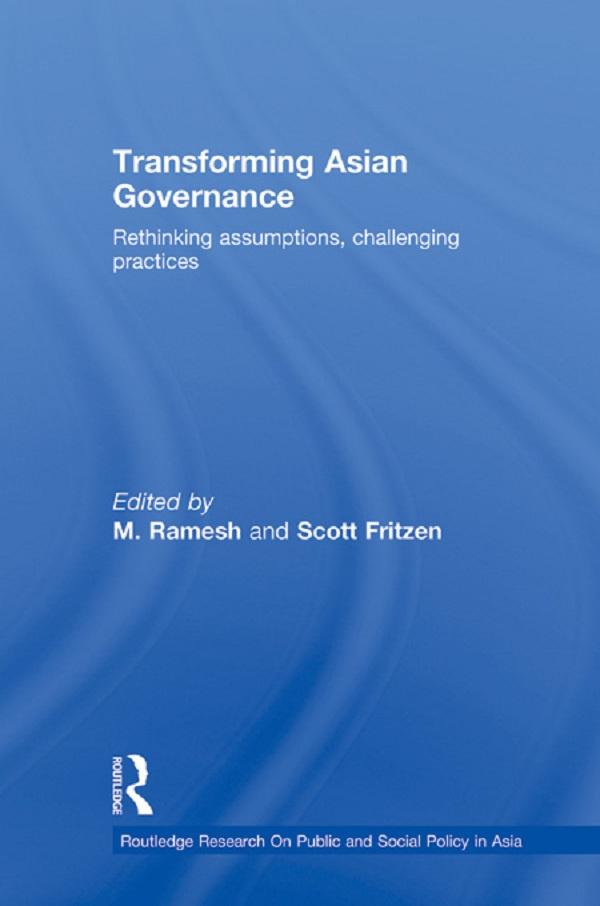
There are a multitude of hazards that confront attempts to change institutional or political orders in pursuit of good governance. Even seemingly technical prescriptions run up against local political and social realities which make their adoption difficult and, if adopted, require significant modification of the original prescriptions. Moreover, the technical, rationalist and/or normative language employed in the good governance discourse masks contests over power, rights, resources, and actors’ conflicting interests. There is a definite need to situate the good governance debate in the local context rather than reflexively adopting a universalistic positing of the fact or desirability of governance convergence across countries and sectors because the reality is that the world-wide deployment of good governance rhetoric is not accompanied by convergence in thinking or practices across nations. Transforming Asian Governance asks:
• How do good governance principles translate into local settings?
• How do local settings influence the conception of what is good governance and how the debate over good governance is deployed as a political or administrative strategy?
Using case studies in governance from Thailand, the Philippines, Pakistan, Malaysia, India, Indonesia, Korea and Japan, this book will be essential reading for anyone interested in the public and social policy of Asia, and international and comparative governance more generally.
Betal nemt med kort, Klarna, Apple Pay eller Google Pay. Ikke tilfreds? Du har altid 14 dages fortrydelsesret. Læs mere i vores vilkår. Har du spørgsmål, så send os en mail på hello@memmo.org.
Memmo gør det nemmere at studere – uanset hvor du er i verden. Hos os samler du dine kursusbøger og smarte studieværktøjer ét sted: resuméer, quizzer, podcasts og flashcards. Og så er der Ted, din studieven, der svarer på alt, du undrer dig over. Over 50 000 studerende studerer allerede her – bygget til at hjælpe dig med at lære hurtigere og stresse mindre.