
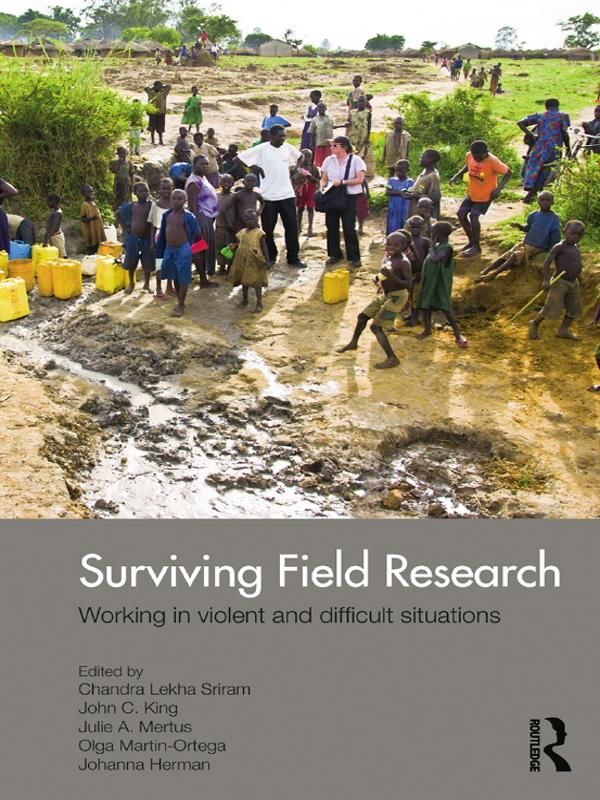
In recent decades there has been increasing attention to mass atrocities such as genocide, war crimes, crimes against humanity, and other gross human rights violations. At the same time, there has been a vast increase in the number of academics and researchers seeking to analyze the causes of, and offer practical responses to, these atrocities. Yet there remains insufficient discussion of the practical and ethical challenges surrounding research into serious abuses and dealing with vulnerable populations.
The aim of this edited volume is to guide researchers in identifying and addressing challenges in conducting qualitative research in difficult circumstances, such as conducting research in autocratic or uncooperative regimes, with governmental or non-governmental officials, and perhaps most importantly, with reluctant respondents such as victims of genocide or (on the other side of the coin) war criminals. The volume proceeds in five substantive sections, each addressing a different challenge of conducting field research in conflict-affected or repressive situations:
- Ethics
- Access
- Veracity
- Security
- Identity, objectivity, behaviour.
This important text will be vital reading for students, scholars and researchers in the areas of research methods, international relations, anthropology and human rights. It will also be of keen interest to policy practioners and NGOs, and especially relevant for those working in the regions of Africa, Latin America, and Asia.
Betal nemt med kort, Klarna, Apple Pay eller Google Pay. Ikke tilfreds? Du har altid 14 dages fortrydelsesret. Læs mere i vores vilkår. Har du spørgsmål, så send os en mail på hello@memmo.org.
Memmo gør det nemmere at studere – uanset hvor du er i verden. Hos os samler du dine kursusbøger og smarte studieværktøjer ét sted: resuméer, quizzer, podcasts og flashcards. Og så er der Ted, din studieven, der svarer på alt, du undrer dig over. Over 50 000 studerende studerer allerede her – bygget til at hjælpe dig med at lære hurtigere og stresse mindre.