
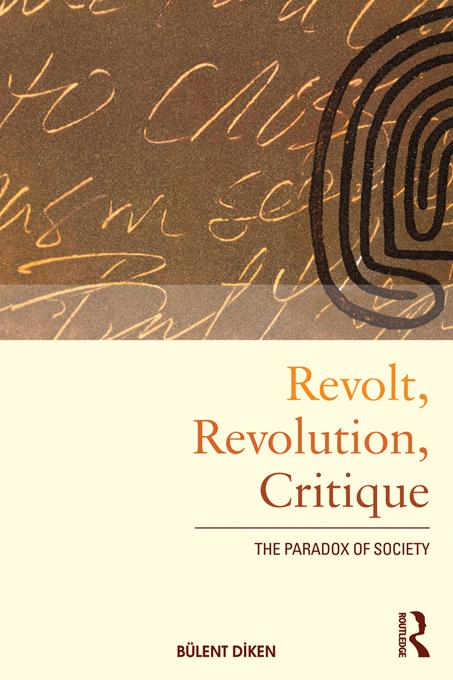
In contemporary society the idea of ‘revolution’ seems to have become obsolete. What is more untimely than the idea of revolution today? At the same time, however, the idea of radical change no longer refers to exceptional circumstances but has become normalized as part of daily life. Ours is a ‘culture’ of permanent revolution in which constant systemic disembedding demands a meta-stable subjectivity in continuous transformation. In this sense, the idea of revolution is painfully timely. This paradoxical coincidence, the simultaneous absence and presence of the desire for radical change in contemporary society, is the point of departure for the symptomatic reading this book offers.
The book addresses the social, political and cultural significance of revolt and revolution in three dimensions. First, it analyzes revolt and revolution as ‘events’ which are of history but not reducible to it. Second, it elaborates on theories that grant revolt and revolution a central place in their structure. Thirdly, it discusses revolutionary or emancipatory theories that seek to participate in radical change. Further, since both revolt and revolution involve the critique of what exists, of actual reality, the implications of the intimate relationship between revolt, revolution and critique are explicated.
Betal nemt med kort, Klarna, Apple Pay eller Google Pay. Ikke tilfreds? Du har altid 14 dages fortrydelsesret. Læs mere i vores vilkår. Har du spørgsmål, så send os en mail på hello@memmo.org.
Memmo gør det nemmere at studere – uanset hvor du er i verden. Hos os samler du dine kursusbøger og smarte studieværktøjer ét sted: resuméer, quizzer, podcasts og flashcards. Og så er der Ted, din studieven, der svarer på alt, du undrer dig over. Over 50 000 studerende studerer allerede her – bygget til at hjælpe dig med at lære hurtigere og stresse mindre.