
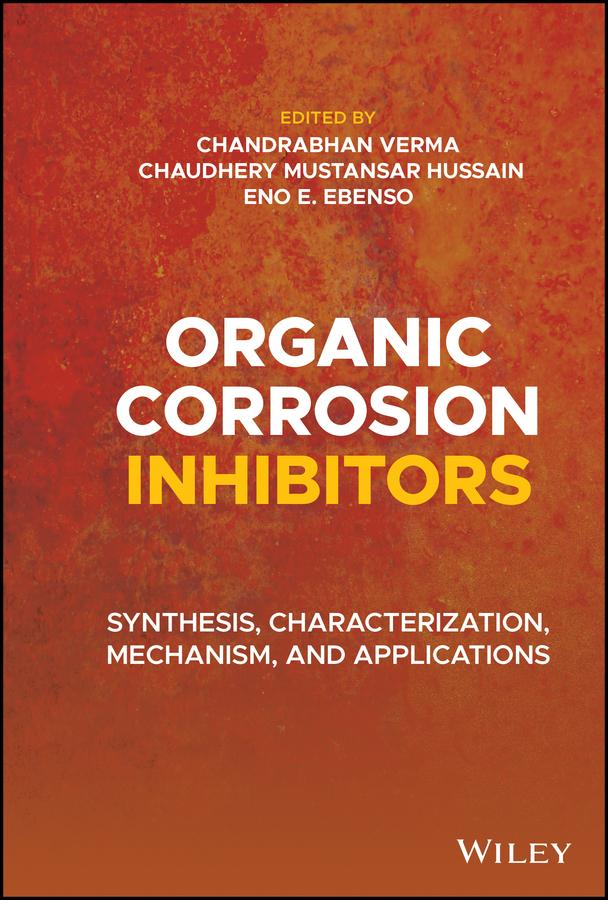
Provides comprehensive coverage of organic corrosion inhibitors used in modern industrial platforms, including current developments in the design of promising classes of organic corrosion inhibitors
Corrosion is the cause of significant economic and safety-related problems that span across industries and applications, including production and processing operations, transportation and public utilities infrastructure, and oil and gas exploration. The use of organic corrosion inhibitors is a simple and cost-effective method for protecting processes, machinery, and materials while remaining environmentally acceptable. Organic Corrosion Inhibitors: Synthesis, Characterization, Mechanism, and Applications provides up-to-date coverage of all aspects of organic corrosion inhibitors, including their fundamental characteristics, synthesis, characterization, inhibition mechanism, and industrial applications.
Divided into five sections, the text first covers the basics of corrosion and prevention, experimental and computational testing, and the differences between organic and inorganic corrosion inhibitors. The next section describes various heterocyclic and non-heterocyclic corrosion inhibitors, followed by discussion of the corrosion inhibition characteristics of carbohydrates, amino acids, and other organic green corrosion inhibitors. The final two sections examine the corrosion inhibition properties of carbon nanotubes and graphene oxide, and review the application of natural and synthetic polymers as corrosion inhibitors. Featuring contributions by leading researchers and scientists from academia and industry, this authoritative volume:
- Discusses the latest developments and issues in the area of corrosion inhibition, including manufacturing challenges and new industrial applications
- Explores the development and implementation of environmentally-friendly alternatives to traditional toxic corrosion inhibitors
- Covers both established and emerging classes of corrosion inhibitors as well as future research directions
- Describes the anticorrosive mechanisms and effects of acyclic, cyclic, natural, and synthetic corrosion inhibitors
Offering an interdisciplinary approach to the subject, Organic Corrosion Inhibitors: Synthesis, Characterization, Mechanism, and Applications is essential reading for chemists, chemical engineers, researchers, industry professionals, and advanced students working in fields such as corrosion inhibitors, corrosion engineering, materials science, and applied chemistry.
Betal nemt med kort, Klarna, Apple Pay eller Google Pay. Ikke tilfreds? Du har altid 14 dages fortrydelsesret. Læs mere i vores vilkår. Har du spørgsmål, så send os en mail på hello@memmo.org.
Memmo gør det nemmere at studere – uanset hvor du er i verden. Hos os samler du dine kursusbøger og smarte studieværktøjer ét sted: resuméer, quizzer, podcasts og flashcards. Og så er der Ted, din studieven, der svarer på alt, du undrer dig over. Over 50 000 studerende studerer allerede her – bygget til at hjælpe dig med at lære hurtigere og stresse mindre.