
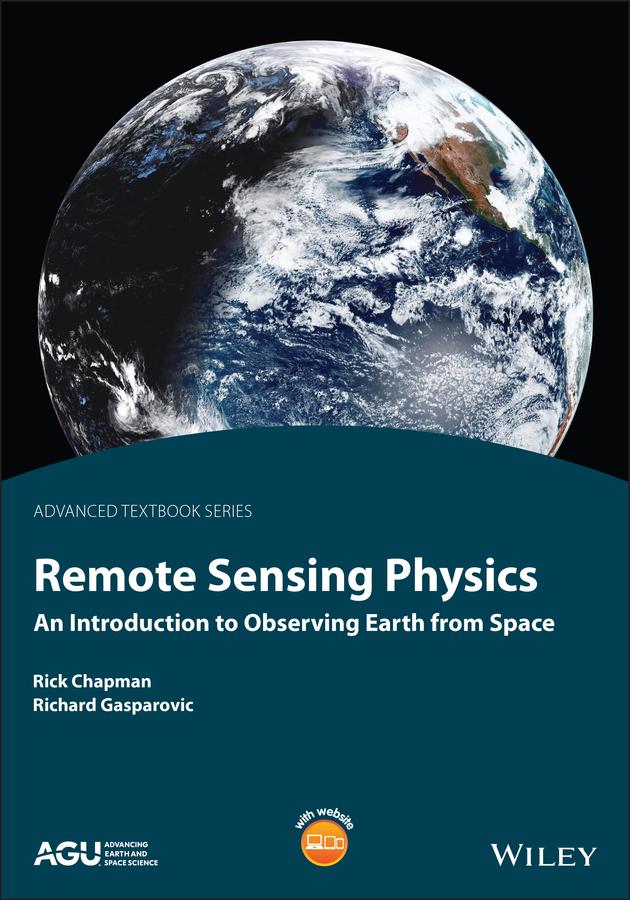
The development of spaceborne remote sensing technology has led to a new understanding of the complexity of our planet by allowing us to observe Earth and its environments on spatial and temporal scales that are unavailable to terrestrial sensors.
Remote Sensing Physics: An Introduction to Observing Earth from Space is a graduate-level text that examines the underlying physical principles and techniques used to make remote measurements, along with the algorithms used to extract geophysical information from those measurements.
Volume highlights include:
- Basis for Earth remote sensing including ocean, land, and atmosphere
- Description of satellite orbits relevant for Earth observations
- Physics of passive sensing, including infrared, optical and microwave imagers
- Physics of active sensing, including radars and lidars
- Overview of current and future Earth observation missions
- Compendium of resources including an extensive bibliography
- Sample problem sets and answers available to instructors
The American Geophysical Union promotes discovery in Earth and space science for the benefit of humanity. Its publications disseminate scientific knowledge and provide resources for researchers, students, and professionals.
Betal nemt med kort, Klarna, Apple Pay eller Google Pay. Ikke tilfreds? Du har altid 14 dages fortrydelsesret. Læs mere i vores vilkår. Har du spørgsmål, så send os en mail på hello@memmo.org.
Memmo gør det nemmere at studere – uanset hvor du er i verden. Hos os samler du dine kursusbøger og smarte studieværktøjer ét sted: resuméer, quizzer, podcasts og flashcards. Og så er der Ted, din studieven, der svarer på alt, du undrer dig over. Over 50 000 studerende studerer allerede her – bygget til at hjælpe dig med at lære hurtigere og stresse mindre.