
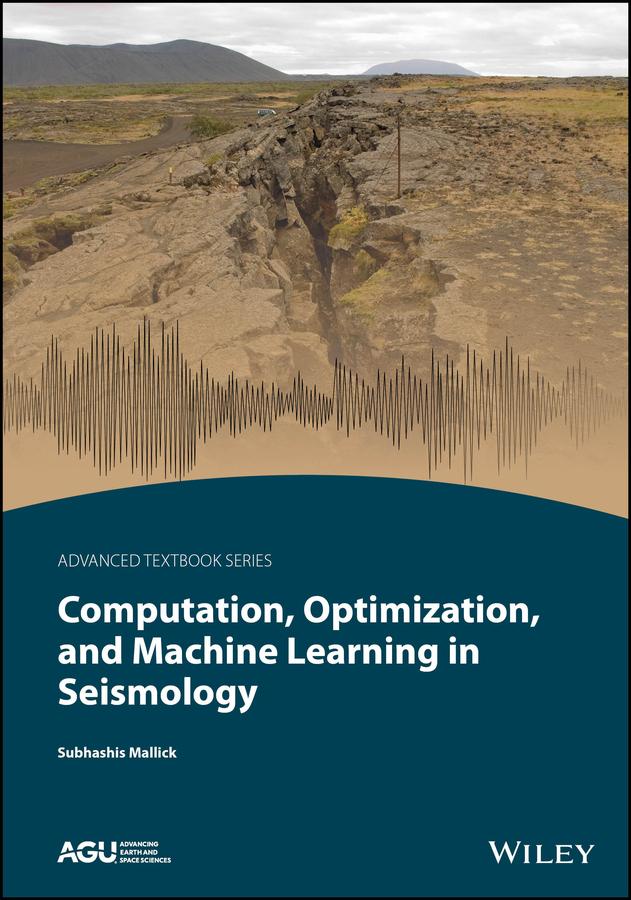
A textbook applying fundamental seismology theories to the latest computational tools
The goal of computational seismology is to digitally simulate seismic waves, create subsurface models, and match these models with observations to identify subsurface rock properties. With recent advances in computing technology, including machine learning, it is now possible to automate matching procedures and use waveform inversion or optimization to create large-scale models.
Computation, Optimization, and Machine Learning in Seismology provides students with a detailed understanding of seismic wave theory, optimization theory, and how to use machine learning to interpret seismic data.
Volume highlights include:
- Mathematical foundations and key equations for computational seismology
- Essential theories, including wave propagation and elastic wave theory
- Processing, mapping, and interpretation of prestack data
- Model-based optimization and artificial intelligence methods
- Applications for earthquakes, exploration seismology, depth imaging, and multi-objective geophysics problems
- Exercises applying the main concepts of each chapter
Betal nemt med kort, Klarna, Apple Pay eller Google Pay. Ikke tilfreds? Du har altid 14 dages fortrydelsesret. Læs mere i vores vilkår. Har du spørgsmål, så send os en mail på hello@memmo.org.
Memmo gør det nemmere at studere – uanset hvor du er i verden. Hos os samler du dine kursusbøger og smarte studieværktøjer ét sted: resuméer, quizzer, podcasts og flashcards. Og så er der Ted, din studieven, der svarer på alt, du undrer dig over. Over 50 000 studerende studerer allerede her – bygget til at hjælpe dig med at lære hurtigere og stresse mindre.