
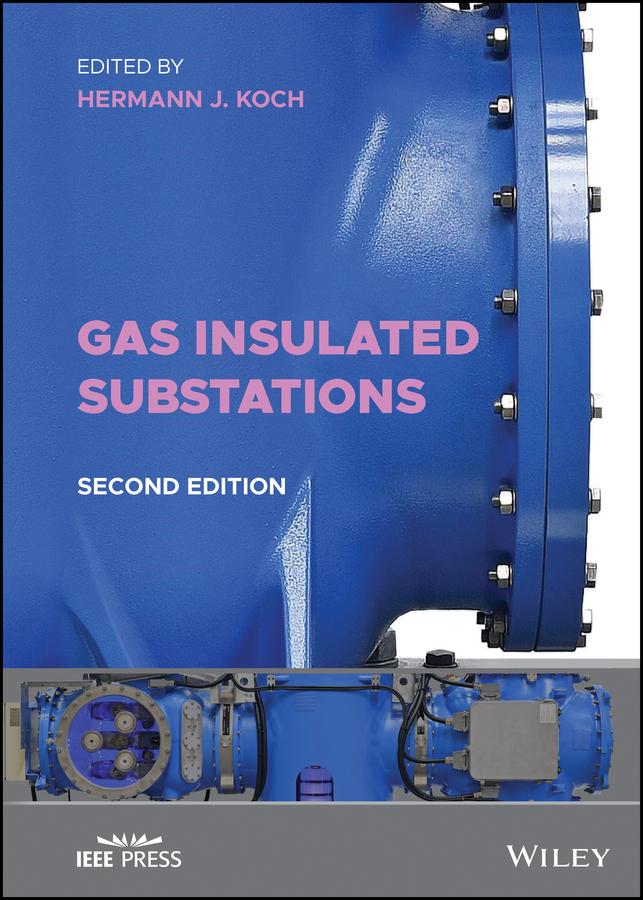
GAS INSULATED SUBSTATIONS
An essential reference guide to gas-insulated substations
The second edition of Gas Insulated Substations (GIS) is an all-inclusive reference guide to gas insulated substations (GIS) and its advanced technologies. Updated to the latest technical developments and applications, the guide covers basic physics of gas insulated systems, SF6 insulating gas and its alternatives, safety aspects and factors to choose GIS. GIS technology, its modular structure, control and monitoring systems, testing, installation rules and guidelines for operation, specification, and maintenance. Detailed information on various types for GIS, with 14 reference project explanations and three extensive case studies give information for the best solutions of practical applications. Special solutions using mobile substations concepts, mixed technology switchgear (MTS) with air and gas insulated technology, underground substations, and the use of special GIS substation buildings e.g., shopping centers, parking lots, city parks, business complexes’ or subway stations are explained. Future developments of GIS technology are shown for the next steps in alternatives to SF6, low power instrument transformers, and digitalization of substations.
A new chapter explains advanced technologies applied to GIS projects which cover the following; environmental issues for the substation permission process, insulation coordination studies for the network requirements including very fast transients, project scope development, risk-based asset management, health and safety impact, electromagnetic fields, SF6 decomposition byproducts and condition assessment.
Disruptive development steps in gas insulated substations technologies are also covered in this second edition. Vacuum breaking and switching technology for rated voltages of up to 500 kV is explained in detail with its physical background. Principle function and possible implementation of low power instrument transformers (LPIT) are explained and examples of applications are given. The principles of digital twin for gas insulated substations (GIS) and gas insulated transmission lines (GIL) are explained in theory and project applications show the practical use and advantage. The wide and fast-growing technical field of offshore GIS applications for AC and DC is explained on many examples and gives information on special requirements when getting offshore. Theoretical requirements on DC gas insulated systems, methods of testing, prototype installation tests, modular design features, and advantages in applications are given. Finally, impact and advantages of digital substations using GIS are explained.
Key features:
- Written by leading GIS experts involved in development and project applications
- Discusses practical and theoretical aspects
- Detailed material of GIS for new and experienced GIS users, and project planners
- Invaluable guide to practicing electrical, mechanical and civil engineers as well as third- and fourth-year electric power engineering students
Betal nemt med kort, Klarna, Apple Pay eller Google Pay. Ikke tilfreds? Du har altid 14 dages fortrydelsesret. Læs mere i vores vilkår. Har du spørgsmål, så send os en mail på hello@memmo.org.
Memmo gør det nemmere at studere – uanset hvor du er i verden. Hos os samler du dine kursusbøger og smarte studieværktøjer ét sted: resuméer, quizzer, podcasts og flashcards. Og så er der Ted, din studieven, der svarer på alt, du undrer dig over. Over 50 000 studerende studerer allerede her – bygget til at hjælpe dig med at lære hurtigere og stresse mindre.