
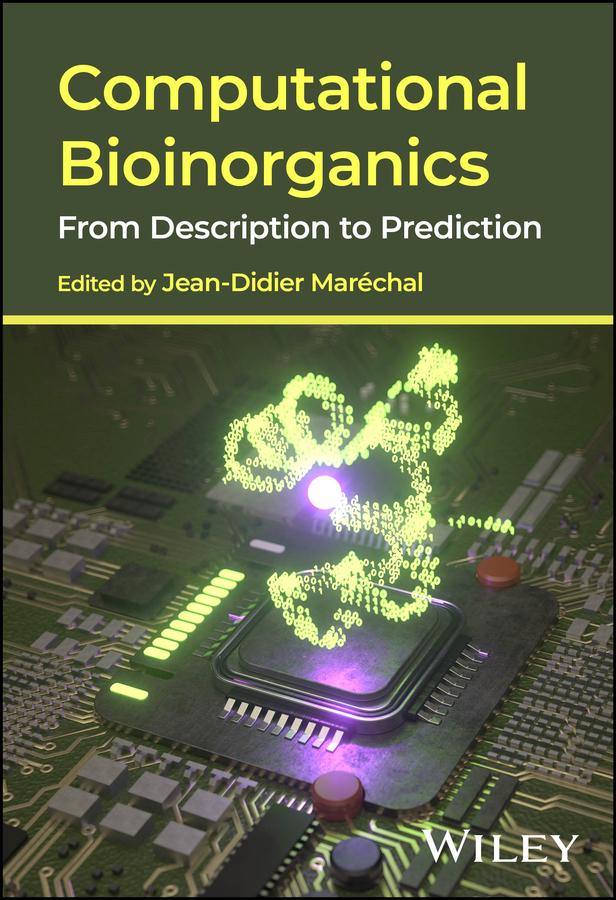
An in-depth overview of what computation can do in bioinorganic chemistry, written for experimentalists and theoreticians
The last decades have shown the emergence of numerous exiting fields in bioinorganic chemistry, such as the design of de novo metalloenzymes, the discovery of new bioactive metallodrugs, or the characterization of molecular mechanisms by which living organisms acquire their metal. In parallel, the computational chemistry community has been working hard on optimizing its framework to deal with biometallic systems; a phenomenon magnified by the increase of computational power and the advent of AI approaches.
Computational Bioinorganics: From Description to Prediction provides an updated view on the current state-of-the-art of the field. The book first intends to clarify how computational and experimental researchers in bioinorganic chemistry can now collaborate under this new computational paradigm. It then follows with a series of chapters that cover a wide range of computational approaches, strategies, and applications. Contributions from a team of experts in computational chemistry expose methods that range from structural bioinformatics, quantum chemistry, large-scale molecular dynamics or multi-scale strategies. They illustrate how these tools can be applied to a wide variety of topics such as the modeling of metal-mediated folding processes, the computer-aided design of metalloenzymes, spectroscopic analysis, the prediction of metal binding sites in proteins or the characterization of the interaction of metallodrugs with biomolecules.
Edited by a recognized leader in the field, Computational Bioinorganics: From Description to Prediction is an essential resource for academic and industrial researchers working in the fields of bioinorganic chemistry, coordination chemistry, biochemistry, computational chemistry, biophysics, bioinformatics, and protein engineering.
Betal nemt med kort, Klarna, Apple Pay eller Google Pay. Ikke tilfreds? Du har altid 14 dages fortrydelsesret. Læs mere i vores vilkår. Har du spørgsmål, så send os en mail på hello@memmo.org.
Memmo gør det nemmere at studere – uanset hvor du er i verden. Hos os samler du dine kursusbøger og smarte studieværktøjer ét sted: resuméer, quizzer, podcasts og flashcards. Og så er der Ted, din studieven, der svarer på alt, du undrer dig over. Over 50 000 studerende studerer allerede her – bygget til at hjælpe dig med at lære hurtigere og stresse mindre.