
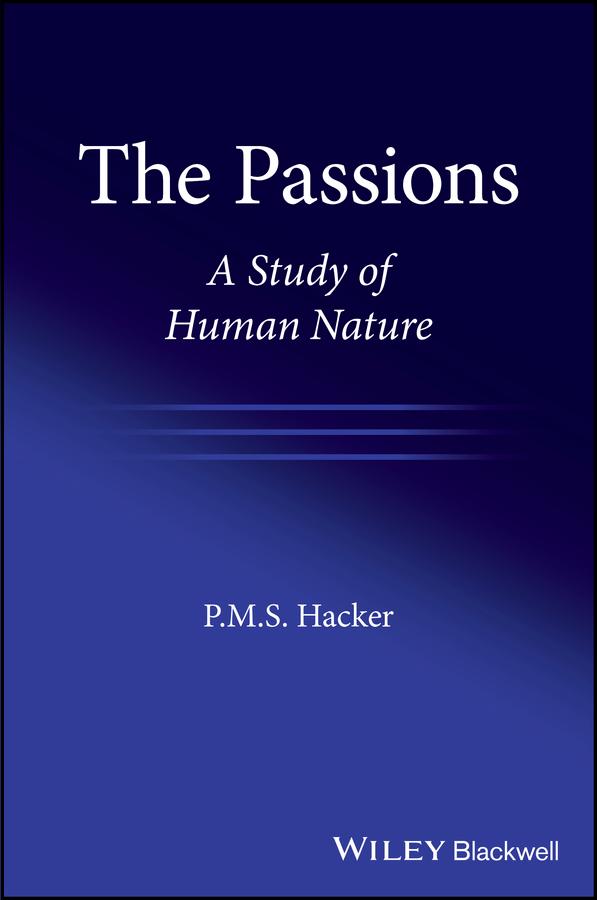
A survey of astonishing breadth and penetration. No cognitive neuroscientist should ever conduct an experiment in the domain of the emotions without reading this book, twice.
Parashkev Nachev, Institute of Neurology, UCL
There is not a slack moment in the whole of this impressive work. With his remarkable facility for making fine distinctions, and his commitment to lucidity, Peter Hacker has subtly characterized those emotions such as pride, shame, envy, jealousy, love or sympathy which make up our all too human nature. This is an important book for philosophers but since most of its illustrative material comes from an astonishing range of British and European literature, it is required reading also for literary scholars, or indeed for anyone with an interest in understanding who and what we are.
David Ellis, University of Kent
Human beings are all subject to boundless flights of joy and delight, to flashes of anger and fear, to pangs of sadness and grief. We express our emotions in what we do, how we act, and what we say, and we can share our emotions with others and respond sympathetically to their feelings. Emotions are an intrinsic part of the human condition, and any study of human nature must investigate them. In this third volume of a major study in philosophical anthropology which has spanned nearly a decade, one of the most preeminent living philosophers examines and reflects upon the nature of the emotions, advancing the view that novelists, playwrights, and poets – rather than psychologists and cognitive neuroscientists – elaborate the most refined descriptions of their role in human life.
In the book’s early chapters, the author analyses the emotions by situating them in relation to other human passions such as affections, appetites, attitudes, and agitations. While presenting a detailed connective analysis of the emotions, Hacker challenges traditional ideas about them and criticizes misconceptions held by philosophers, psychologists, and cognitive neuroscientists.
With the help of abundant examples and illustrative quotations from the Western literary canon, later sections investigate, describe, and disentangle the individual emotions – pride, arrogance, and humility; shame, embarrassment, and guilt; envy and jealousy; and anger. The book concludes with an analysis of love, sympathy, and empathy as sources of absolute value and the roots of morality.
A masterful contribution, this study of the passions is essential reading for philosophers of mind, psychologists, cognitive neuroscientists, students of Western literature, and general readers interested in understanding the nature of the emotions and their place in our lives.
Betal nemt med kort, Klarna, Apple Pay eller Google Pay. Ikke tilfreds? Du har altid 14 dages fortrydelsesret. Læs mere i vores vilkår. Har du spørgsmål, så send os en mail på hello@memmo.org.
Memmo gør det nemmere at studere – uanset hvor du er i verden. Hos os samler du dine kursusbøger og smarte studieværktøjer ét sted: resuméer, quizzer, podcasts og flashcards. Og så er der Ted, din studieven, der svarer på alt, du undrer dig over. Over 50 000 studerende studerer allerede her – bygget til at hjælpe dig med at lære hurtigere og stresse mindre.