
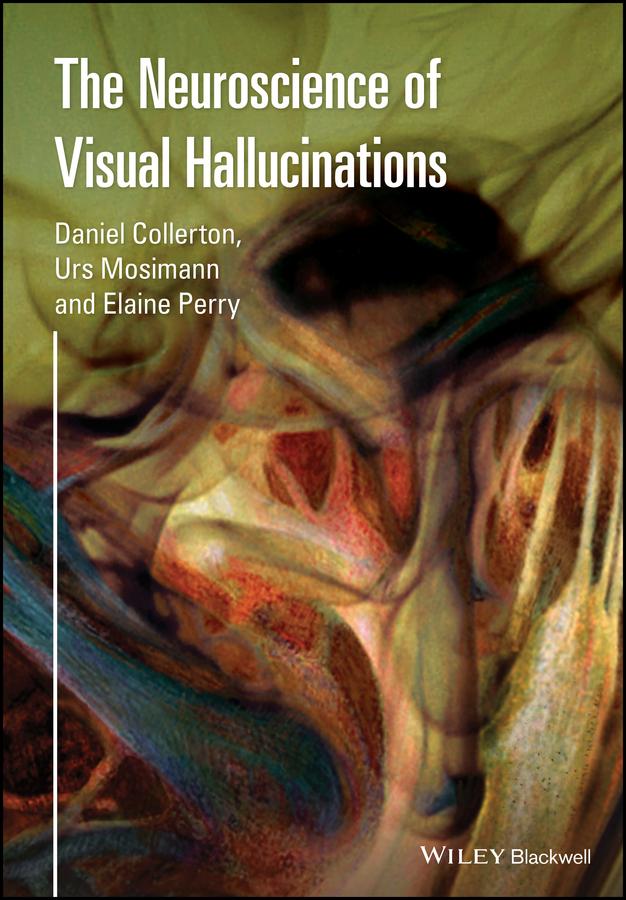
Each year, some two million people in the United Kingdom experience visual hallucinations. Infrequent, fleeting visual hallucinations, often around sleep, are a usual feature of life. In contrast, consistent, frequent, persistent hallucinations during waking are strongly associated with clinical disorders; in particular delirium, eye disease, psychosis, and dementia. Research interest in these disorders has driven a rapid expansion in investigatory techniques, new evidence, and explanatory models. In parallel, a move to generative models of normal visual function has resolved the theoretical tension between veridical and hallucinatory perceptions. From initial fragmented areas of investigation, the field has become increasingly coherent over the last decade. Controversies
and gaps remain, but for the first time the shapes of possible unifying models are becoming clear, along with the techniques for testing these.
This book provides a comprehensive survey of the neuroscience of visual hallucinations and the clinical techniques for testing these. It brings together the very latest evidence from cognitive neuropsychology, neuroimaging, neuropathology, and neuropharmacology, placing this within current models of visual perception.
Leading researchers from a range of clinical and basic science areas describe visual hallucinations in their historical and scientific context, combining introductory information with up-to-date discoveries. They discuss results from the main investigatory techniques applied in a range of clinical disorders. The final section outlines future research directions investigating the potential for new understandings of veridical and hallucinatory perceptions, and for treatments of problematic hallucinations.
Fully comprehensive, this is an essential reference for clinicians in the fields of the psychology and psychiatry of hallucinations, as well as for researchers in departments, research institutes and libraries. It has strong foundations in neuroscience, cognitive science, optometry, psychiatry, psychology, clinical medicine, and philosophy. With its lucid explanation and many illustrations, it is a clear resource for educators and advanced undergraduate and graduate students.
Betal nemt med kort, Klarna, Apple Pay eller Google Pay. Ikke tilfreds? Du har altid 14 dages fortrydelsesret. Læs mere i vores vilkår. Har du spørgsmål, så send os en mail på hello@memmo.org.
Memmo gør det nemmere at studere – uanset hvor du er i verden. Hos os samler du dine kursusbøger og smarte studieværktøjer ét sted: resuméer, quizzer, podcasts og flashcards. Og så er der Ted, din studieven, der svarer på alt, du undrer dig over. Over 50 000 studerende studerer allerede her – bygget til at hjælpe dig med at lære hurtigere og stresse mindre.