
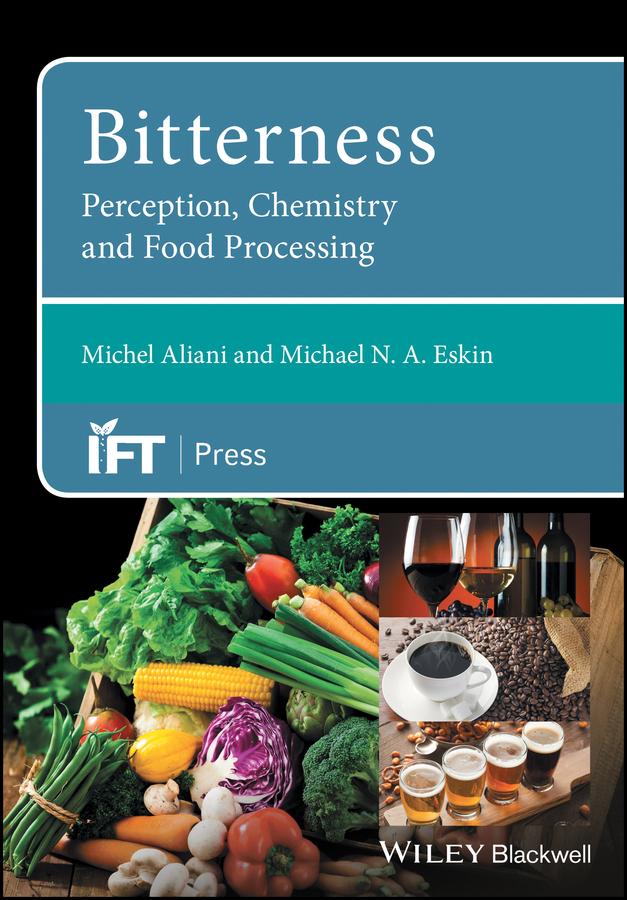
The increasing demand for healthy foods has resulted in the food industry developing functional foods with health-promoting and/or disease preventing properties. However, many of these products bring new challenges. While drugs are taken for their efficacy, functional foods need to have tastes that are acceptable to consumers. Bitterness associated with the functional foods is one of the major challenges encountered by food industry today and will remain so in years to come. This important book offers a thorough understanding of bitterness, the food ingredients that cause it and its accurate measurement.
The authors provide a thorough review of bitterness that includes an understanding of the genetics of bitterness perception and the molecular basis for individual differences in bitterness perception. This is followed by a detailed review of the chemical structure of bitter compounds in foods where bitterness may be considered to be a positive or negative attribute. To better understand bitterness in foods, separation and analytical techniques used to identify and characterize bitter compounds are also covered.
Food processing can itself generate compounds that are bitter, such as the Maillard reaction and lipid oxidation related products. Since bitterness is considered a negative attribute in many foods, the methods being used to remove and/mask it are also thoroughly discussed.
Betal nemt med kort, Klarna, Apple Pay eller Google Pay. Ikke tilfreds? Du har altid 14 dages fortrydelsesret. Læs mere i vores vilkår. Har du spørgsmål, så send os en mail på hello@memmo.org.
Memmo gør det nemmere at studere – uanset hvor du er i verden. Hos os samler du dine kursusbøger og smarte studieværktøjer ét sted: resuméer, quizzer, podcasts og flashcards. Og så er der Ted, din studieven, der svarer på alt, du undrer dig over. Over 50 000 studerende studerer allerede her – bygget til at hjælpe dig med at lære hurtigere og stresse mindre.