
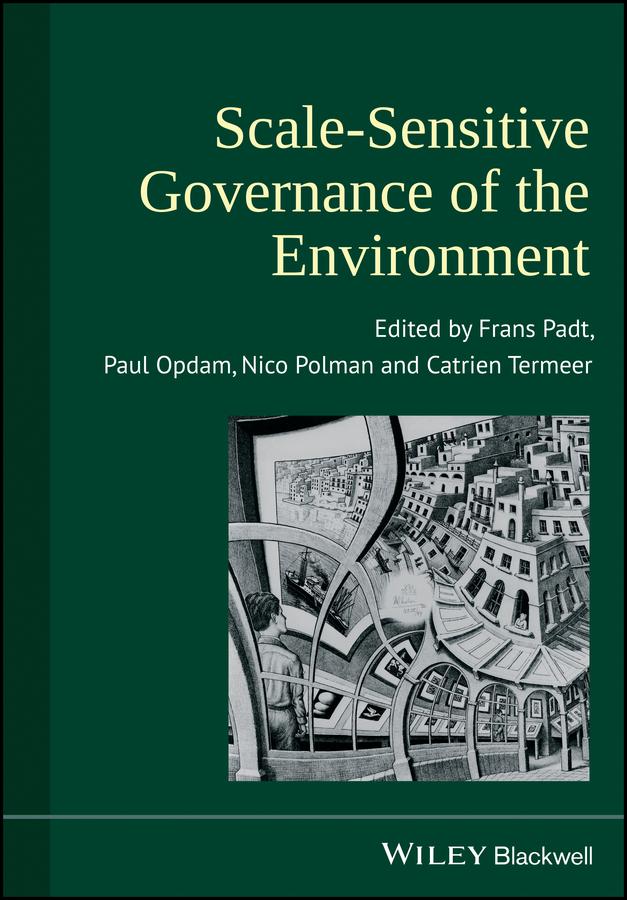
Sensitivity to scales is one of the key challenges in environmental governance. Climate change, food production, energy supply, and natural resource management are examples of environmental challenges that stretch across scales and require action at multiple levels. Governance systems are typically ill-equipped for this task due to organisational and jurisdictional specialisation and short-term planning horizons. Further to this, scientific knowledge is fragmented along disciplinary lines and research traditions in academia and research institutions. State-of-the-art, Scale-Sensitive Governance of the Environment addresses these challenges by establishing the foundation for a new, trans-disciplinary research field. It brings together and reframes a variety of disciplinary approaches, using the idea of scales to create a conceptual and methodological basis for scale-sensitive governance of the environment from both a natural and social science perspective. This volume presents new visions, methods and innovative applications of thinking and decision making across scales in space and time to develop a holistic view on the subject. It is unique in providing: F analysis on how spatial, temporal, and governance scales are constructed, politically and scientifically defined, institutionalized in governance practices, and strategically used in policy discourses F details on how current environmental governance practices can be enriched by the use of theory on scale, with specific research themes to show the benefits of recognizing scales in empirical research F insightful case studies drawn from countries in the Americas, Eastern and Southern Africa, Europe, and South and Southeastern Asia, covering a wide range of environmental topics including biodiversity, climate change, commodities (tea and palm oil), cultural landscapes, energy, forestry, natural resource management, pesticides, urban development, and water management. With its comprehensive coverage of scale and scaling issues and convergence of widely different scientific approaches, this book is essential for environmental scientists, policy makers and planners, also conservation biologists and ecologists who are involved in modeling climate change impacts and sustainability. This reference will also benefit students of environmental studies, and all those who seek a response to the urgent environmental governance challenges for the decades ahead.
Betal nemt med kort, Klarna, Apple Pay eller Google Pay. Ikke tilfreds? Du har altid 14 dages fortrydelsesret. Læs mere i vores vilkår. Har du spørgsmål, så send os en mail på hello@memmo.org.
Memmo gør det nemmere at studere – uanset hvor du er i verden. Hos os samler du dine kursusbøger og smarte studieværktøjer ét sted: resuméer, quizzer, podcasts og flashcards. Og så er der Ted, din studieven, der svarer på alt, du undrer dig over. Over 50 000 studerende studerer allerede her – bygget til at hjælpe dig med at lære hurtigere og stresse mindre.