
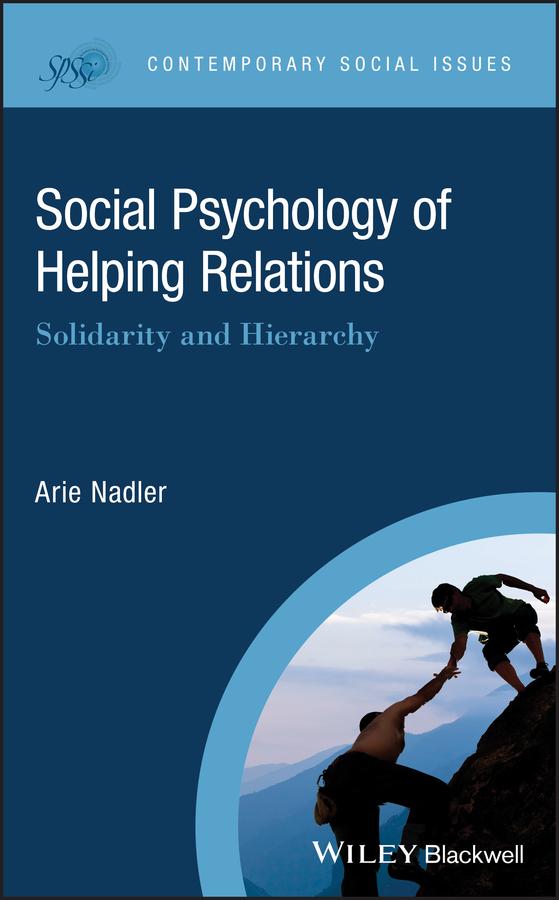
Examines the major aspects of giving and receiving help in interpersonal and intergroup relations
This unique book extends the traditional emphasis on interpersonal help-giving in order to consider a wider spectrum of interpersonal and intergroup helping relations. Help giving is viewed as reflecting people’s care for others, while at the same time dependency on help and giving help imply lower and higher places on the social hierarchy, respectively. It studies the psychology of what goes into helping someone and integrates experimental work conducted in the social psychological laboratory with applied research from volunteer organizations, schools, and work and family environments. In addition to research on the giving of help, the book considers the recipient of help and reviews research and theory on people's readiness to seek and receive help. Unlike much of past research in this context that has been interested in the “generosity question” (i.e., whether or not people help others) the book considers how different kinds of assistance (i.e., autonomy and dependency-oriented help) shape helping interactions. It then goes beyond the analyses of the immediate helping interaction to consider the long-term consequences of giving and receiving help. Finally, the book addresses theory and research on intergroup helping relations.
Social Psychology of Helping Relations: Solidarity and Hierarchy begins with a general introduction to the topic. It then offers a series of broad perspectives, covering the philosophical and psychological theory, evolution, and overview of social psychological research. Next, the book looks at the social psychology of helping relations, examining the parties involvedt, and the “why” behind their actions. The positives and negatives of giving and receiving assistance, and the links between status and interpersonal and intergroup helping relations are also covered. It considers how giving, seeking and receiving help maintains or challenges status relations between individuals and groups. The book finishes with a conclusion that wraps up the many lessons learned.
- Looks at solidarity and inequality in social interactions
- Examines why people are ready to give and receive help
- Studies the consequences of giving and receiving help
- Highlights important implications to different kinds of help beyond the dichotomy between giving/receiving help or not
- Addresses research and theory on interpersonal and intergroup helping relations
- The implications of helping relations for personal and social change
Social Psychology of Helping Relations: Solidarity and Hierarchy is an ideal book for advanced students, researchers and individuals interested in social psychology, counselling, social work, Sociology, and Political Science.
Betal nemt med kort, Klarna, Apple Pay eller Google Pay. Ikke tilfreds? Du har altid 14 dages fortrydelsesret. Læs mere i vores vilkår. Har du spørgsmål, så send os en mail på hello@memmo.org.
Memmo gør det nemmere at studere – uanset hvor du er i verden. Hos os samler du dine kursusbøger og smarte studieværktøjer ét sted: resuméer, quizzer, podcasts og flashcards. Og så er der Ted, din studieven, der svarer på alt, du undrer dig over. Over 50 000 studerende studerer allerede her – bygget til at hjælpe dig med at lære hurtigere og stresse mindre.