
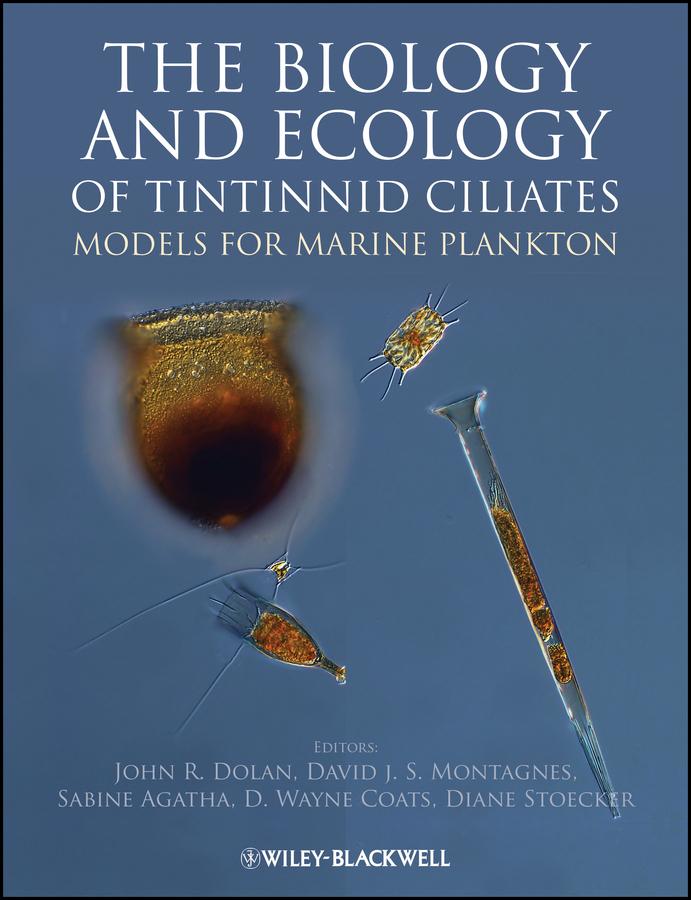
Planktonic protists both produce and consume most of the primary production in the world ocean. They not only play key roles in the oceans but also represent an astounding amount of diversity: ecological morphological and genetic. However, for most taxa their ecology, morphology, phylogeny and biogeography are either poorly known or appear to be largely unrelated to one another; this hinders our understanding of their biology as well as interpretation of emerging genetic data. Tintinnid ciliates represent a singular exception. Compared to nearly all other groups of planktonic protists, there is a very substantial and relatively detailed literature (both modern and historical) on tintinnids. This volume synthesizes knowledge concerning a wide variety of topics ranging from anatomy and systematics, physiology, behavior, ecology (including ecological roles, predators, parasites, biogeography, and cysts) to fossil history. It will appeal to an audience ranging from advanced undergraduates to researchers in the fields of Oceanography, Marine Biology and Microbial Ecology.
Betal nemt med kort, Klarna, Apple Pay eller Google Pay. Ikke tilfreds? Du har altid 14 dages fortrydelsesret. Læs mere i vores vilkår. Har du spørgsmål, så send os en mail på hello@memmo.org.
Memmo gør det nemmere at studere – uanset hvor du er i verden. Hos os samler du dine kursusbøger og smarte studieværktøjer ét sted: resuméer, quizzer, podcasts og flashcards. Og så er der Ted, din studieven, der svarer på alt, du undrer dig over. Over 50 000 studerende studerer allerede her – bygget til at hjælpe dig med at lære hurtigere og stresse mindre.