
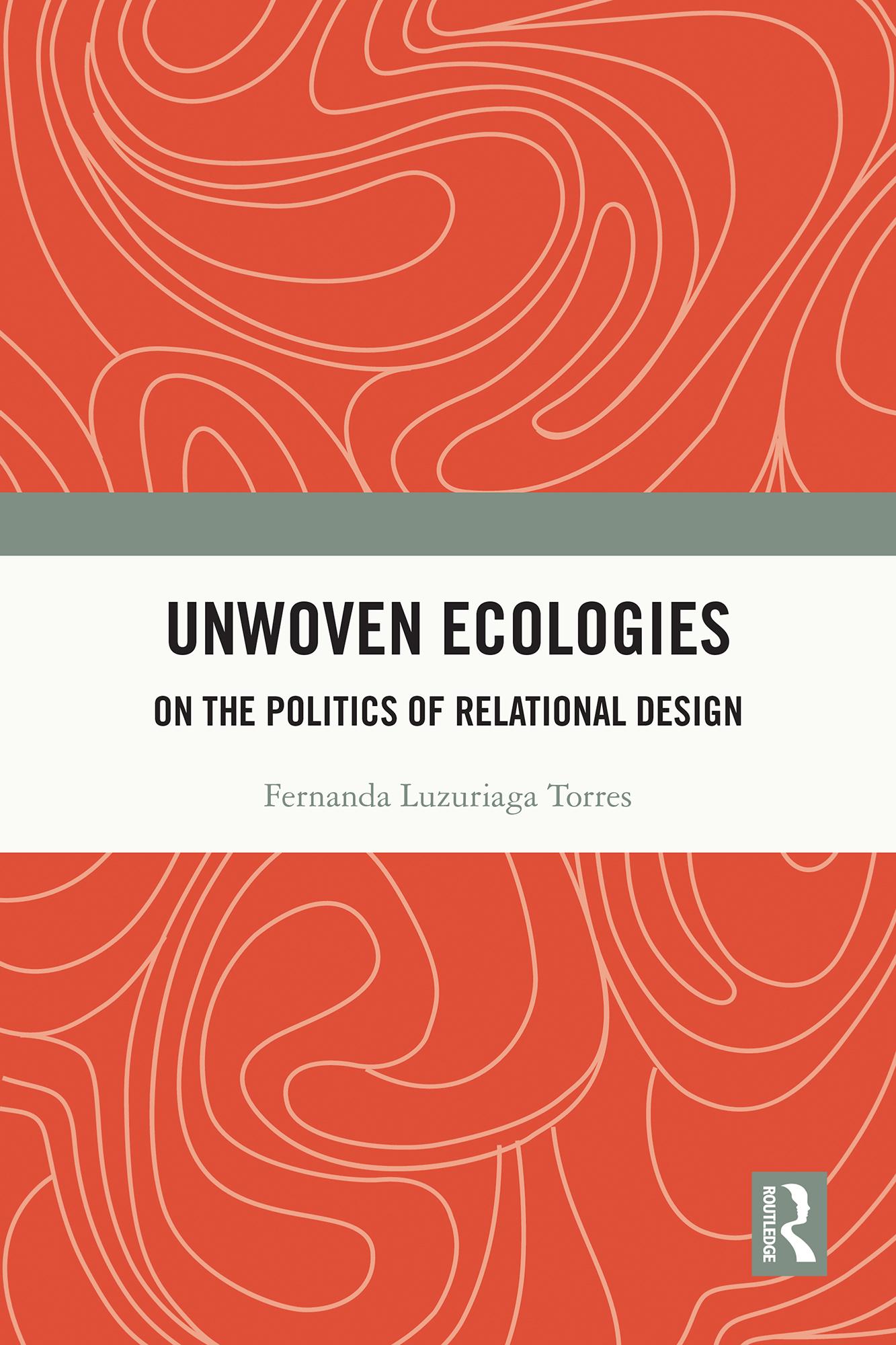
This book addresses the urgency of rethinking coexistence through urbanism. In the face of contemporary global crises, it argues that modern thought and its dichotomies
are insufficient to grasp current territorial conflicts. Instead, it proposes viewing coexistence as a field of friction among beings, knowledges, and economies
intertwined within a relational ecology, suggesting that these connections serve as the very point of departure for urbanism.
Grounded in research from the Ecuadorian Amazon, the work situates local conflicts within global dynamics of the coloniality of power. Methodologically,
it pairs socio-spatial analysis with the microhistories of Kichwa women, bringing to light living spatial configurations. Informed by cannibal thought and the bodyterritory
continuum, these practices reframe urbanism as cosmic diplomacy and predation, while the ch’ixi framework offers a way to conceive coexistence without
assimilation.
Unwoven Ecologies: On the Politics of Relational Design is intended for scholars, postgraduate students, urban planners, and activists in political ecology and decolonial
theory who are seeking relational methodologies to foster resilient models of dwelling on Earth.
Betal nemt med kort, Klarna, Apple Pay eller Google Pay. Ikke tilfreds? Du har altid 14 dages fortrydelsesret. Læs mere i vores vilkår. Har du spørgsmål, så send os en mail på hello@memmo.org.
Memmo gør det nemmere at studere – uanset hvor du er i verden. Hos os samler du dine kursusbøger og smarte studieværktøjer ét sted: resuméer, quizzer, podcasts og flashcards. Og så er der Ted, din studieven, der svarer på alt, du undrer dig over. Over 50 000 studerende studerer allerede her – bygget til at hjælpe dig med at lære hurtigere og stresse mindre.