
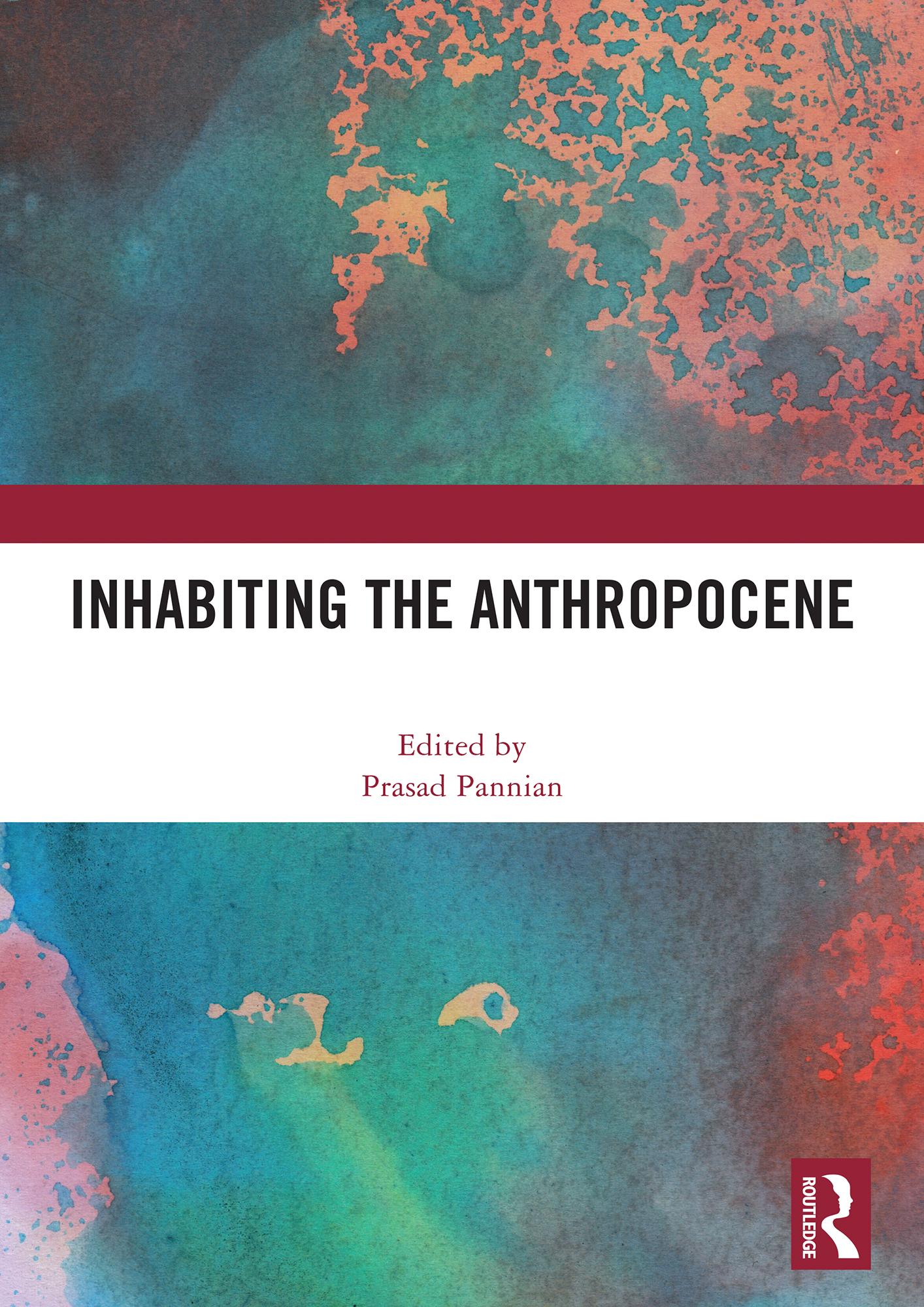
What does it mean to inhabit a world in which human activity has become a geological force? As climate change, ecological crisis, and environmental uncertainty increasingly reshape life on Earth, the humanities are compelled to rethink some of their most enduring
assumptions about history, nature, agency, and the human itself.
Bringing together scholars from diverse disciplines, Inhabiting the Anthropocene explores how the Anthropocene unsettles familiar distinctions between human and natural history, culture, and environment, and the human and the nonhuman. Moving across philosophy, literary studies, environmental humanities, historiography, media studies, ecology, and cultural theory, the essays in this volume engage questions of climate, technology, species life, ecological consciousness, and planetary transformation.
Addressing themes such as posthumanism, phenomenology, climate fiction, ontology, nonhuman worlds, and South Asian histories and ecologies, the collection reflects on the intellectual and ethical challenges of living in an age of accelerating environmental change. The volume will interest scholars, students, and readers concerned with ecology, climate, and the future of life on a rapidly changing planet.
Betal nemt med kort, Klarna, Apple Pay eller Google Pay. Ikke tilfreds? Du har altid 14 dages fortrydelsesret. Læs mere i vores vilkår. Har du spørgsmål, så send os en mail på hello@memmo.org.
Memmo gør det nemmere at studere – uanset hvor du er i verden. Hos os samler du dine kursusbøger og smarte studieværktøjer ét sted: resuméer, quizzer, podcasts og flashcards. Og så er der Ted, din studieven, der svarer på alt, du undrer dig over. Over 50 000 studerende studerer allerede her – bygget til at hjælpe dig med at lære hurtigere og stresse mindre.